FreeScore360 Scam Targets Users With Misleading Credit Score Emails
The new FreeScore360 scam is spreading through unsolicited email messages that advertise fast access to credit scores and urgent alerts about possible data breach exposure. These emails are sent to users who never signed up for the service and redirect to pages that promote a seven day trial which converts into recurring monthly charges. The setup resembles other subscription style traps often linked to credit monitoring affiliate networks and misleading promotional funnels.
How the FreeScore360 Scam Reaches Users
The email arrives from irregular addresses routed through unfamiliar domains, such as long randomized subdomains under hosting structures like the.camping-trip.gover.tamlongthienphu.com. The sender line may include variations of Free_Score_Check_360 or other phrasing intended to look official or trustworthy. Despite this appearance, the email is not sent from a legitimate credit bureau or any verified financial organization.
Subject: Get your credit scores fast with FreeScore360
From: Free_Score_Check_360 <example@randomizeddomain.rmc>“Could a data breach put you at risk? What can you do to protect your credit and identity? If you are not actively watching your credit reports and scores, start immediately. Early detection is critical. Get all three scores now.”
“Checking your credit will not harm your credit scores. Your seven day free trial expires soon. After your trial you will be billed monthly unless you cancel.”
The message encourages the recipient to click through and check their credit scores for free. It references cyberthreats, identity risks, and the need for immediate monitoring. These themes are common in email lead generation scams because they prompt fast action and reduce suspicion about the legitimacy of the offer.
Redirect Chains Lead to Paid Membership Pages
The link in the email does not go directly to FreeScore360. Instead it leads to a TinyURL link that forwards through several tracking layers before landing on a site operated by One Technologies, LLC. The landing page promotes ScoreSense and related credit products through a seven day free trial that converts into a recurring subscription. The terms state that the trial ends after seven days, followed by monthly charges of 29.95 for three months and 39.95 monthly afterward unless the customer cancels.
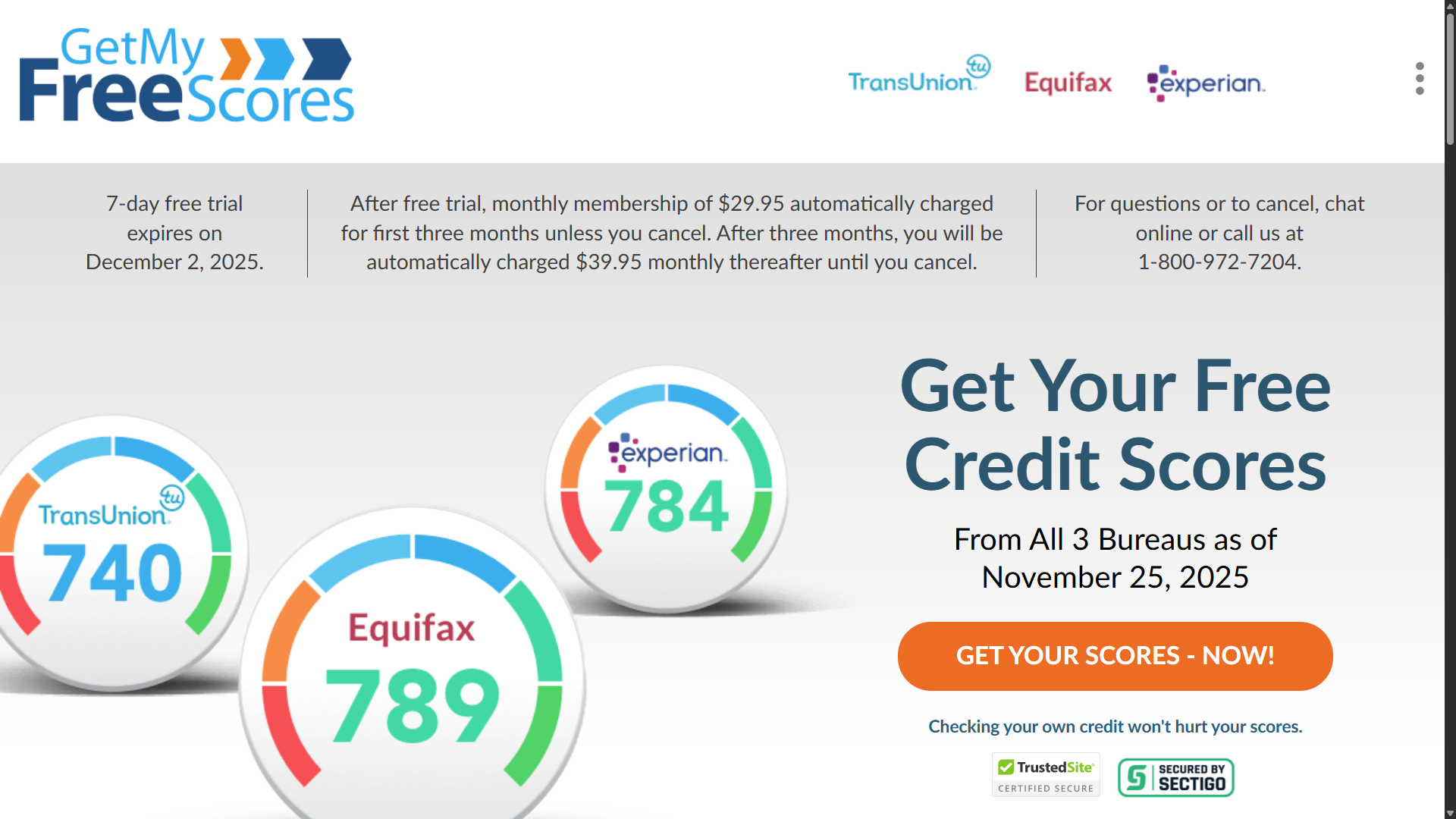
One Technologies has operated multiple credit score brands over the years, including GetMyFreeScores, FreeScoreOnline, FreeScore360, ScoreSense, and NationalCreditReport. Although these products are legal, they have a long history of complaints about unclear billing, aggressive cancellation requirements, and confusing promotional funnels that resemble high pressure sales rather than transparent credit services.
The domain used in this particular attack, getmyfreescores.com, is registered through CSC Corporate Domains and hosted on Cloudflare name servers. WHOIS data shows the domain has existed since 2012, but its presence in unsolicited spam campaigns raises credibility concerns.
What Users Report About FreeScore360
Reports across Reddit describe nearly identical patterns involving FreeScore360 and similar credit score sites. Victims commonly encounter these links during Craigslist rental scams, fake background check requests, phishing messages, and emails claiming an urgent need to verify identity or credit status. Users say they were pressured to check their credit through a specific link before being shown rental properties or receiving additional details.
Reddit threads also highlight the following patterns:
- Scammers use FreeScore360 links to earn referral commissions.
- Fake landlords insist that applicants check credit scores through this site before viewing a rental property.
- Messages often contain poor grammar, rushed instructions, or generic names.
- Prices for advertised apartments are far below market rates, suggesting no real property exists.
- Victims are required to enter personal details, email addresses, phone numbers, and credit card information to start the “free trial.”
The result is not always outright credit card theft. Instead the funnel is designed to capture personal information and convert as many users as possible into paid subscriptions; it’s essentially affiliate bait. In some cases “affiliate baiters” request screenshots of credit reports afterward, making the attempt even more suspicious.
Risks and Concerns
The risks of engaging with the FreeScore360 scam go beyond an unexpected subscription fee. Unsolicited credit score requests can expose users to privacy issues, misuse of personal data, phishing attempts, identity impersonation, and secondary scams. Any service that requests full identity details without consent or verification should be avoided.
Because the email claims to be sent by “Trusted Sender” or similar wording, some recipients may interpret the message as safe. However, the mailing infrastructure, redirect patterns, and pressure driven messaging indicate that the email is part of a promotional spam campaign rather than a legitimate credit monitoring alert.
How to Identify and Avoid the FreeScore360 Scam
Botcrawl may earn a commission from purchases made through links in this article.
- Treat all unsolicited credit score offers as unsafe.
- Never click credit score links sent through unfamiliar or randomized domains.
- Do not provide personal or payment information to any service you did not seek out.
- Use official resources for free credit reports, such as annualcreditreport.com.
- Monitor spam emails regularly and report phishing attempts when possible.
- Review your financial accounts for unwanted charges after interacting with suspicious sites.
- Use security tools like Malwarebytes to scan for any unwanted software or tracking scripts that may have been installed.
The FreeScore360 scam operates by pairing alarming language about data breaches with redirect pages that lead to subscription based services. Anyone who receives a similar message should avoid interacting with the link and should never provide credit card information to unsolicited promotions.
For related investigation and scam alerts, see the Scams section and the Cybersecurity category on Botcrawl.