Reserve Credit Card Scam Uses Fake Visa Card Offer To Steal Your Money
A new and very dangerous Reserve Credit Card scam came to my attention after I found an advertisement on Facebook promoting what looked like a sleek silver Visa credit card for people trying to get approved for credit.
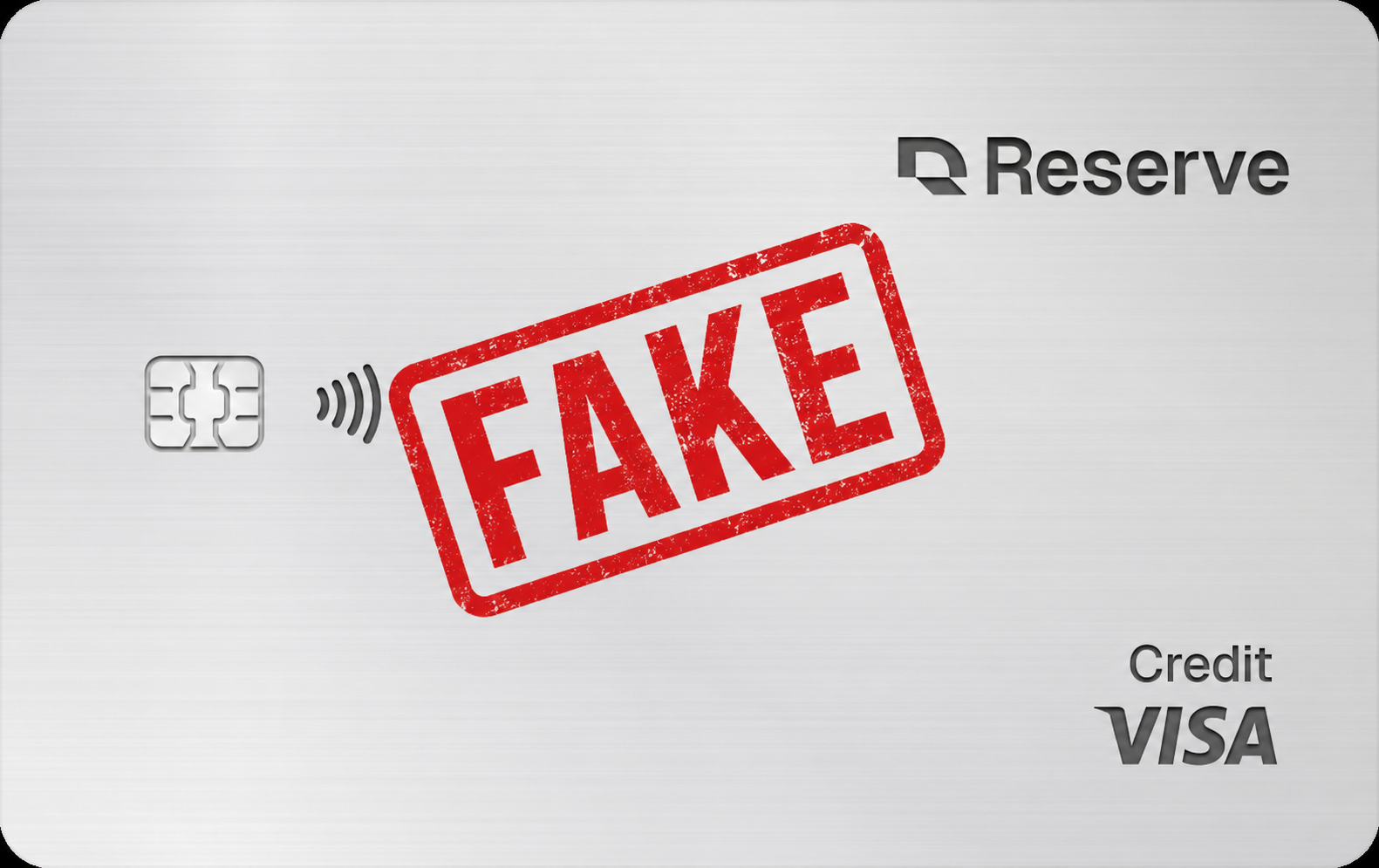
The scam, known as the Reserve Credit Card scam, Reserve Card scam, or Visa Reserve card scam, uses social media advertisements and the website reservecreditcard.com to reel in victims looking for a new credit card. The website is minimalist, attractive, easy to use, and legitimate-looking enough that it is easy to understand why visitors may be duped at first sight. However, Reserve Credit Card is not a real credit card. It is a confirmed advance fee credit card scam designed to collect personal information, payment information, and upfront fees from people who believe they are being approved for a real Visa credit card.
How The Reserve Credit Card Scam Works
The scammers post advertisements on Facebook and other social media apps promoting a credit card, usually to people with low income, low credit scores, or people looking for easier credit approval. The ad may say “You’re Pre-Approved” and show an image of a sleek silver Visa credit card.
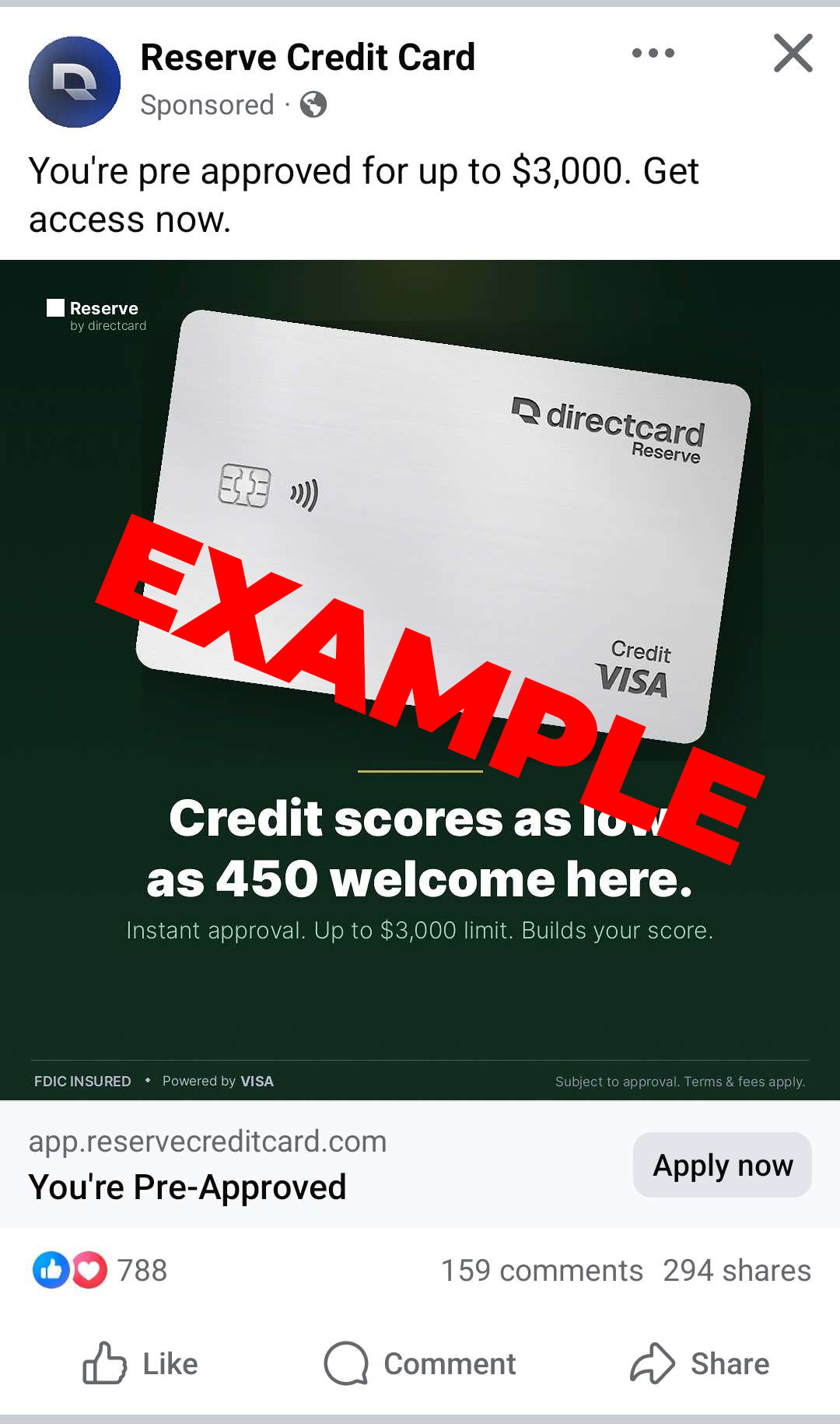
The Reserve logo looks nice. The fake card looks professional. The website looks clean. They even have a Facebook account. For the most part, Reserve Credit Card looks legitimate from the outside, but that is the trap.
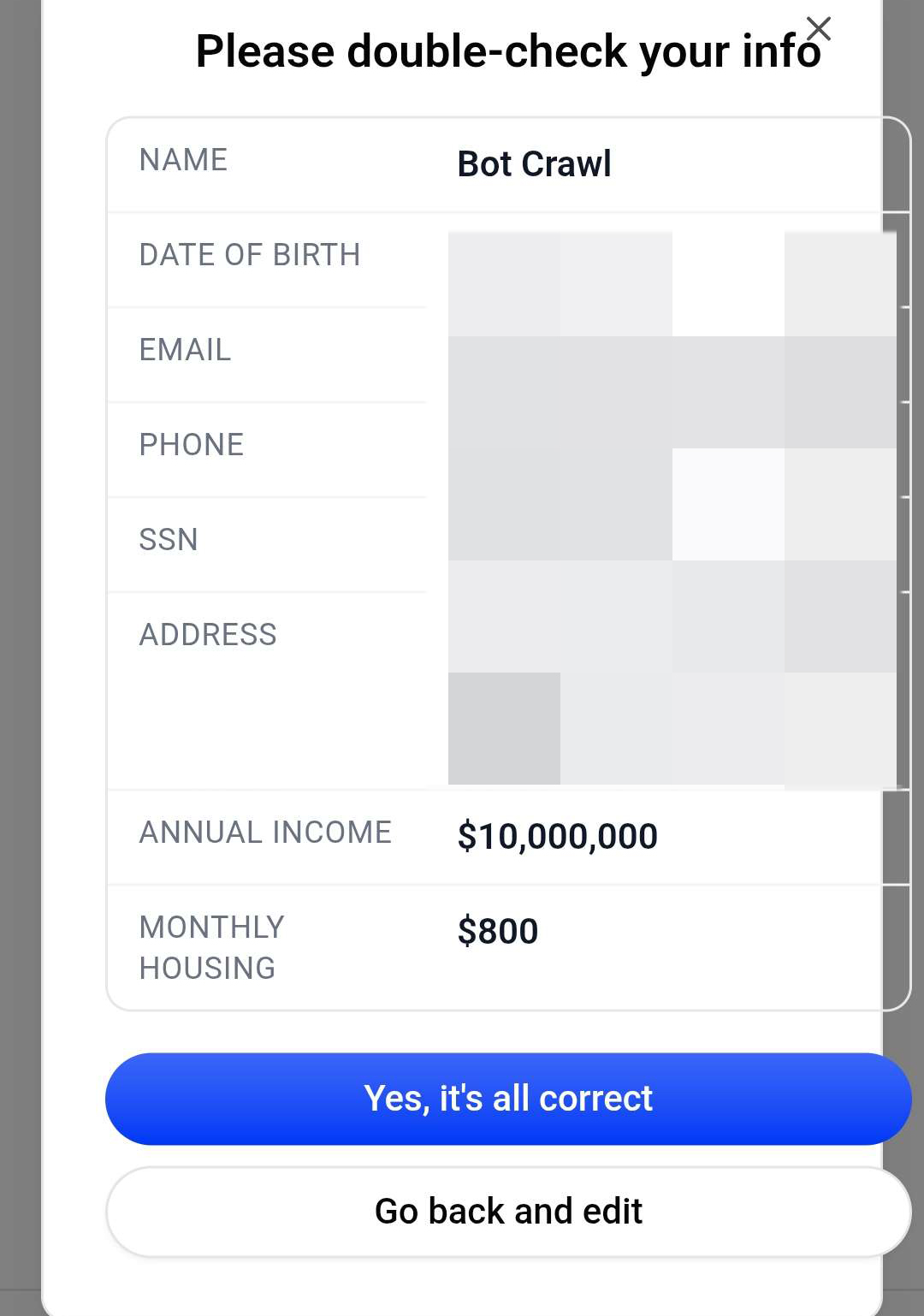
The advertisements lead to reservecreditcard.com, where visitors are asked to enter sensitive personal information.
- Full name
- Home address
- Email address
- Phone number
- Date of birth
- Annual income
- Monthly housing cost
- Social Security number
Once the form is completed, the website says the visitor is pre-approved or approved and displays fake credit card details.
- $300 credit line
- 35.99% APR
- $75 annual fee
- A message saying the applicant was approved
If the visitor accepts the fake offer, reservecreditcard.com asks for a one-time application fee. In my test, the application fee was $35. After the application fee was paid, the website also required a program fee before the card would supposedly be shipped. Fee amounts may be different for some users.
I Confirmed The Reserve Credit Card Scam Myself
To confirm the Reserve Credit Card scam, I not only looked into the history of the domain name itself, which has only existed since January 2026 and is registered for one year (something a legitimate credit card issuer would never do), I tested the website myself with fake information, including a fake name, fake date of birth, fake income, and 555-55-5555 as the Social Security number. The website still approved the application and moved me to the payment step.
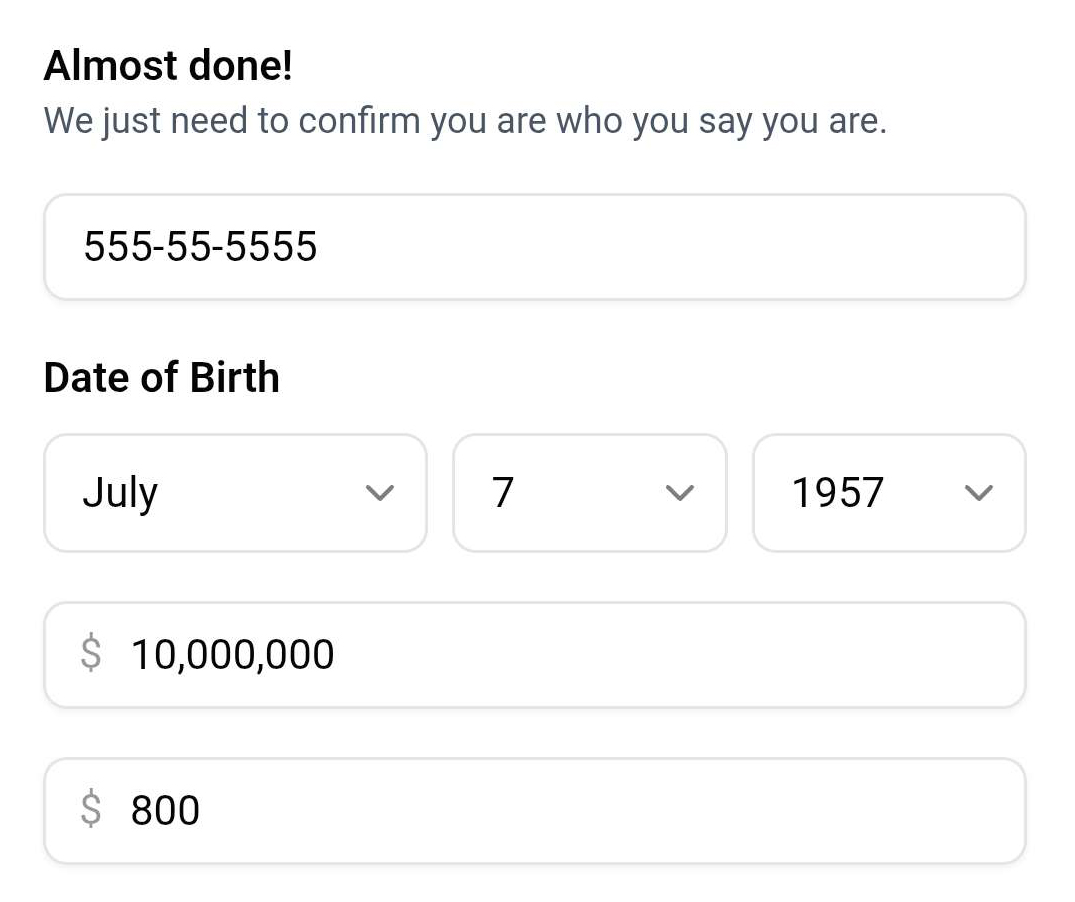
A real credit card issuer does not approve an application with obviously fake identity information and then ask for an upfront payment to open the account.
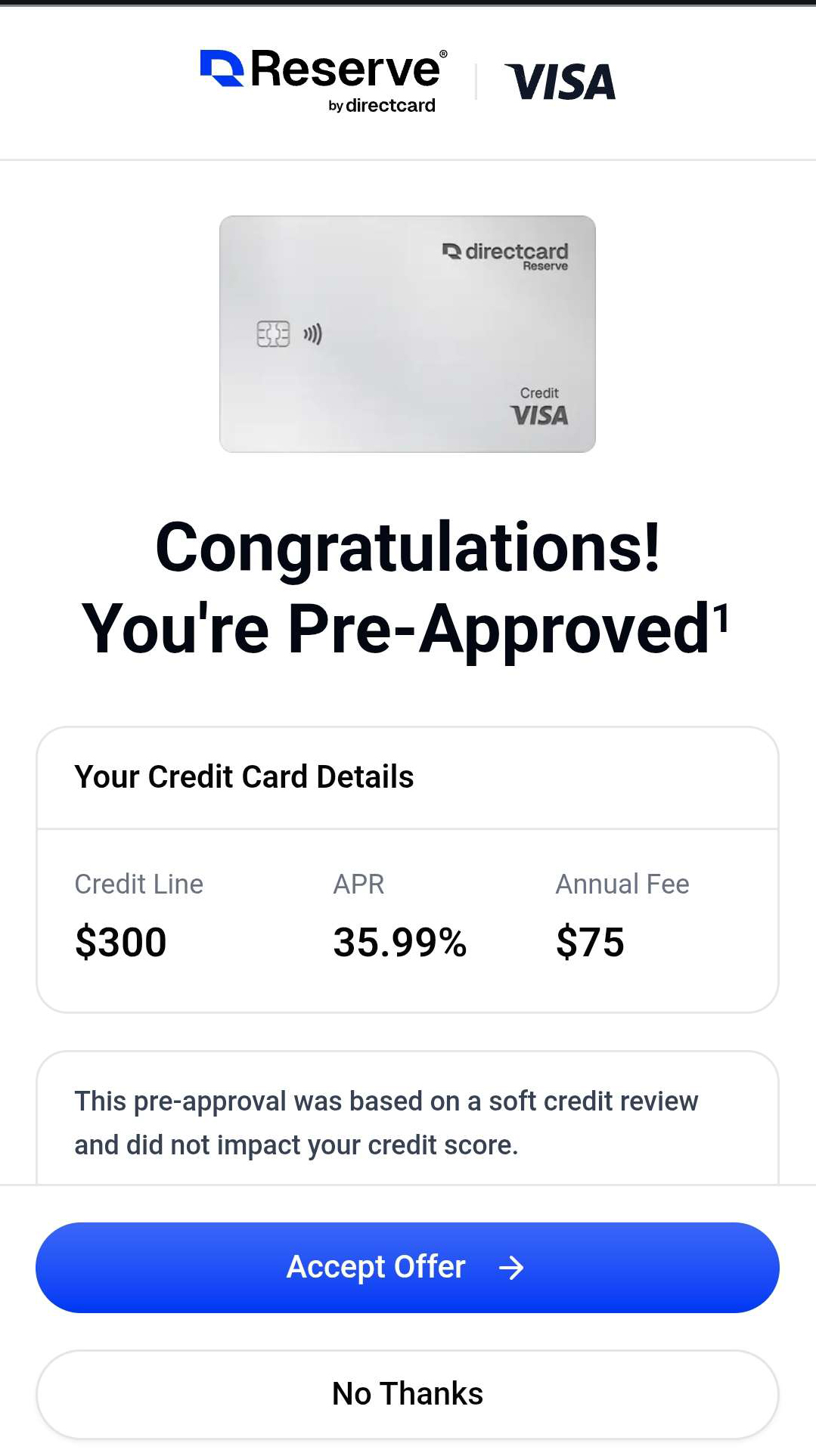
The fake approval page showed a $300 credit line, 35.99% APR, and a $75 annual fee. Then the site asked for a $35 application fee from an external payment card. I also stated that my fake income was $10,000,000, which makes the $300 limit another obvious red flag.
After paying the $35 application fee using a throwaway card, the website also required a $60 program fee before the card would supposedly be shipped. In my statement, the $35 charge looked like this:
Botcrawl may earn a commission from purchases made through links in this article.
RESERVE CARD

LOS ANGELES , CA

$35
I paid both the application fee and the program fee using a throwaway credit card, which is a red flag by itself because no legitimate credit card issuer would require another credit card for upfront fees before issuing a card.
The fake approval flow is designed to make victims believe they are almost done. After submitting the fake application, the website shows a “Congratulations” style page claiming the user is pre-approved. The fake card details are displayed like a normal credit card offer, with the credit line, APR, and annual fee shown in a clean card-style layout.
After accepting the offer, the next screen asks the victim to pay the application fee. In my test, the page said:
Complete your application fee to get started.
The page then requested payment details for a one-time $35 application fee. After that, the website required a separate $60 program fee before the card shipment could move forward.
This is one of the clearest signs of the Reserve Credit Card scam. The website approves fake information, shows fake card terms, collects upfront fees, and then does not send a real credit card.
Before payment, victims may also receive emails that make the scam look more convincing.
One email says:
You’re approved for the Reserve Credit Card®.
Another message says:
Your card will be shipped once your fees have been paid.
Victims may also see wording that says the card shipment is pending payment of the application and program fees. This is the same advance fee setup used in many scams. The victim is told they were approved for something valuable, then told they must pay money before receiving it.
I also found a way to contact Reserve Credit Card through the account area via Chat. When I opened the chat, it connected to an AI agent. I wrote that I wanted a refund and cancellation because I believed it was a scam and the AI agent said it would connect me with someone who could help with the refund and cancellation request. After that, no real person responded for more than 30 minutes. Some people on Trustpilot claim they spoke with support by phone, but I was not connected to anyone through the website chat during my test.
This is a confirmed scam alike many others and the sad reality is that no Reserve Credit Card will be sent to anyone who paid the fees. The fake credit card offer is designed to collect personal information, payment information, and advance payments from victims.
The information collected by reservecreditcard.com can put victims at serious risk of identity theft. A scammer with a victim’s full name, home address, email address, phone number, date of birth, Social Security number, and payment details can use that information for identity theft, unauthorized charges, phishing, future scam attempts, or resale to other scammers.
Even if a victim does not pay the fee, entering personal information on the Reserve Credit Card website can still create a serious privacy and identity theft risk.
There are also suspicious signs around the reservecreditcard.com domain and online presence.
Reservecreditcard.com is a new domain created in 2026 and does not have the kind of long public history expected from a legitimate financial product. Real credit card companies normally have clear banking partners, established trust signals, public history, and verifiable details before asking for Social Security numbers and payment information.
There are also complaints about reservecreditcard.com online from people who say they paid fees and never received a card. Outside of a few strange positive comments that mostly compliment the website design, there is no meaningful positive history showing that this is a trustworthy credit card.
I also noticed suspicious activity connected to the reservecreditcard.com domain. One public listing connected to reservecreditcard.com appeared under the name “chasesapphirecard” with a Chase Bank logo as the primary image, while app.reservecreditcard.com appeared under a separate Reserve-related name. That kind of mismatch raises more concern about the operation behind the website and whether similar credit card scams may have been attempted under other names.
If you see an advertisement for Reserve Credit Card, Reserve Card, Visa Reserve card, or reservecreditcard.com, do not treat it like a real credit card offer.
- Do not pay the $35 application fee.
- Do not pay any program fee.
- Do not enter your real Social Security number.
- Do not enter your debit card or credit card number.
- Do not trust the pre-approval message.
- Do not trust the website because it looks clean.
- Do not trust the offer because it appeared in a Facebook ad.
- Do not believe the card is real because the website uses a Visa logo.
- Do not continue if the website approves fake or obviously wrong information.
- Do not send more money if the website says another fee is required before shipment.
What To Do If You Paid The Reserve Credit Card Fee
If you fell for the Reserve Credit Card scam and paid any type of fee, contact your bank or credit card company right away. Tell them exactly what happened. Explain that you paid a scam website for a fake credit card offer and need help disputing the charge.
- Dispute the charge immediately.
- Ask your bank or card issuer to block additional charges.
- Request a new card number if you entered payment information.
- Freeze or lock the payment card used on the website.
- Monitor your account for unfamiliar transactions.
- Save screenshots of the website, payment page, ad, and emails.
- Report the Facebook ad or social media ad that led you to the website.
If you entered your Social Security number, take the situation seriously. Consider placing a fraud alert or credit freeze with the major credit bureaus. A credit freeze can help stop scammers from opening new accounts in your name.
You can report the scam to the Federal Trade Commission at ReportFraud.ftc.gov. If your identity information was submitted, you can also visit IdentityTheft.gov to create a recovery plan.
I recommend using Malwarebytes to scan your device and help block malicious websites, phishing pages, and scam links before they load.
The Reserve Credit Card scam is a confirmed fake credit card scam. Reservecreditcard.com accepted fake information, approved a fake applicant, requested a $35 application fee, collected sensitive personal information, required a program fee, displayed a fake pending card dashboard, never sent a card, and failed to provide timely help through chat support. Anyone who sees an ad for Reserve Credit Card, Reserve Card, Visa Reserve card, or reservecreditcard.com should avoid it completely.