Sextortion Scam Spoofs Your Email Address And Demands $800 In Bitcoin
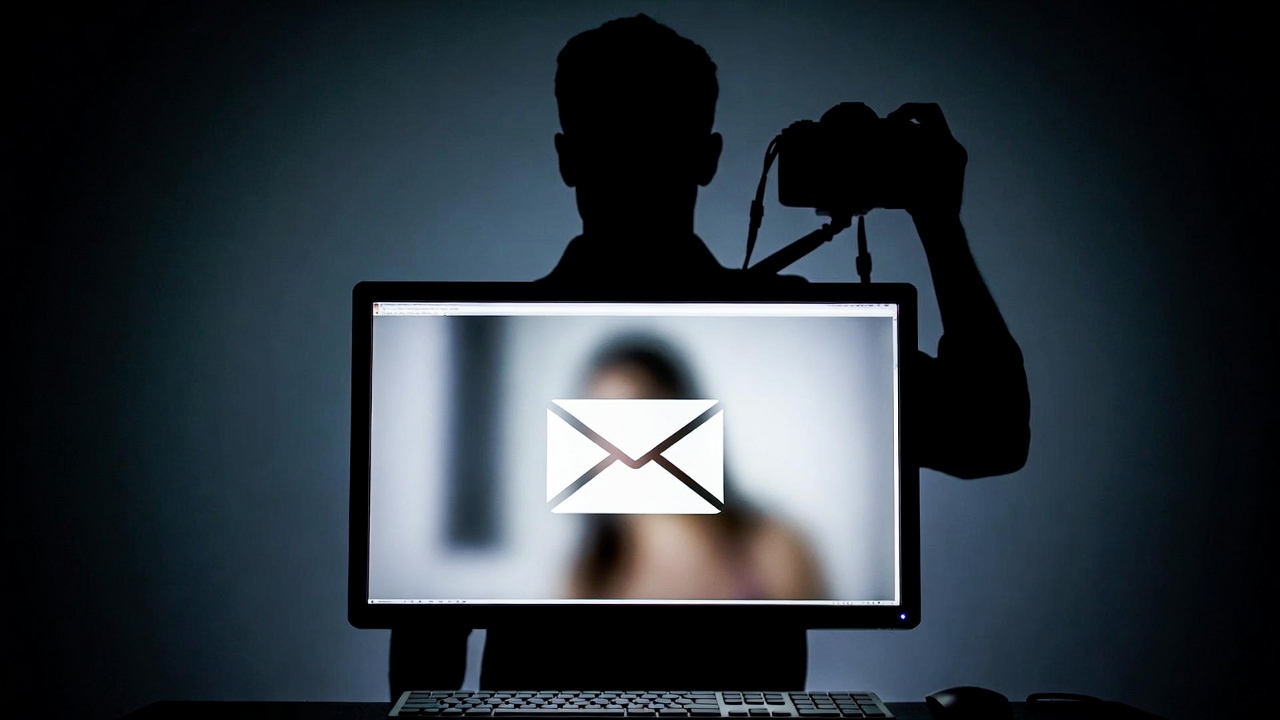
A sextortion scam has been circulating where the scammer spoofs the victim’s email address to make it look as if the email was sent from inside their own account. The email then claims that “there is some bad news for you” and that “your device was infected with my private Trojan” or “R.A.T. (Remote Administration Tool)” that “RECORDED YOU (through your camera)” during a private moment. The message then says that the scammer will “share the video of you (during a private moment) with your family, friends, relatives, all email contacts, on social networks, and the darknet” unless $800 USD in Bitcoin is transferred to their wallet, which is listed as 1Gpu4hxcqpLZyjQ4JHZ6ieojyVBFj81Y3K but may vary by message. At this time, 1Gpu4hxcqpLZyjQ4JHZ6ieojyVBFj81Y3K does not carry a balance and there is no transaction history, which would indicate that no one has fallen for this scam.
Rest assured, if you have never seen an email like this before, it is fake. In association with this scam, no one hacked your email and sent you this message, no one infected your device with a Trojan, and you were not recorded through your camera. You do not have to worry about videos of you being sent to “family, friends, relatives, all email contacts, on social networks, and the darknet.” This is a very common email scam known as a sextortion email scam that rose in popularity around October 2018 and died off over the years. Once in a while, new campaigns such as this one are started, but this scam is seen as less successful than before. In years past, people took these scams seriously and fell for them. Some paid the scammers, and some even took their own lives to avoid the alleged embarrassment of being exposed.
Here is an example of an email I received in my bait inbox twice:
Subject: YOU PERVERT! I RECORDED YOU!
From: Your email addressHello!
Unfortunately, there is some bad news for you.
Some time ago, your device was infected with my private Trojan, R.A.T. (Remote Administration Tool).
If you want to find out more about it, simply use Google.
My Trojan allowed me to access your files, accounts, and your camera.
Check the sender of this email; I have sent it from your email account!
To ensure you read this email, you will receive it multiple times.
I RECORDED YOU (through your camera) MASTURBATING!
After that, I removed my malware to leave no traces.
If you still doubt my serious intentions, it only takes a couple of mouse clicks to share the video of you masturbating with your family, friends, relatives, all email contacts, on social networks, and the darknet.
All you need is $800 USD in Bitcoin (BTC), transferred to my wallet address.
After the transaction is successful, I will proceed to delete everything.
I keep my promises!
You can purchase Bitcoin (BTC) from reputable exchanges here:
http://www.coinbase.com – Payment options: Credit/Debit Cards, Bank Transfers, PayPal (in some regions).
http://www.binance.com – Payment options: Credit/Debit Cards, Bank Transfers, P2P trading, third-party payment providers, and gift cards.
http://www.bitrefill.com – Payment options: Paysafecard, credit/debit cards, crypto, bank transfer, and other gift cards.
http://www.crypto.com – Payment options: Credit/Debit Cards, Bank Transfers, Apple Pay, Google Pay, and more.
http://www.kucoin.com – Payment options: Credit/Debit Cards, Bank Transfer, third-party payment providers, and P2P.
http://www.etoro.com – Payment options: Credit/Debit Cards, Bank Transfers, PayPal.
http://www.kraken.com – Payment options: Bank Transfers, Wire Transfers.Alternatively, simply Google for other exchanges.
Once purchased, you can send the Bitcoin (BTC) directly to my wallet address or use a wallet application such as Atomic Wallet or Exodus Wallet to manage your transactions.
My Bitcoin (BTC) wallet address is: 1Gpu4hxcqpLZyjQ4JHZ6ieojyVBFj81Y3K
Yes, that’s how the wallet address looks. Copy and paste my wallet address; it’s case-sensitive.
A piece of advice from me: regularly change all your passwords and update your device with the latest security patches.
If you received this email or one like it, report it, ignore it, delete it, and do not reply to it. This type of scam has been losing momentum over the years, so not reacting to it is the best move and may help it eventually fade out. One can only hope, although the Nigerian Prince scam is still around these days.
What To Do If You Were Scammed
If you were scammed by this scammer, you either paid some type of fee during a conversation with them or sent Bitcoin to the wallet listed in the email. Paying the demand will not result in any action being taken because this was a scam and no recording of you exists with this scammer. Paying the fee simply means you paid the scammer money. You are also more likely to be targeted again in the future because paying a scammer does not take you off scam lists, darknet lists, or make scams disappear in general.
If you sent Bitcoin, the transaction usually cannot be reversed, but you should still document everything and report what happened. Save the email, Bitcoin wallet address, transaction hash, screenshots, and any messages connected to the scam. If you used an exchange to send the payment, contact the exchange and report the wallet address and transaction.
Botcrawl may earn a commission from purchases made through links in this article.
- Do not reply to the scammer again.
- Do not send more money, even if the scammer threatens you again.
- Save the email, wallet address, transaction hash, screenshots, and any messages connected to the scam.
- Report the email as phishing or spam in your email account.
- If you used a crypto exchange, contact the exchange and report the scam payment.
- Change your email password if you are worried, especially if you clicked a link or entered login information anywhere.
- Enable two-factor authentication on your email account and any important accounts connected to it.
- Check your email account for unfamiliar forwarding rules, filters, recovery addresses, or login activity.
- Scan your device with Malwarebytes if you clicked any links, downloaded anything, or want to check your computer for malware.
- If you are in the United States, report the scam to IC3.gov and ReportFraud.ftc.gov.
The most important thing is to stop communicating with the scammer. These emails are designed to scare people into acting quickly, but the claims are fake. No video exists, no hacker is waiting to expose you, and paying the scammer only gives them money and a reason to keep targeting you.