Manus “Add Credit” Feature Raising Ethical Concerns Among Users
The Manus platform has been gaining attention for its rapid growth in the AI space, but some users are raising concerns about how its billing system works, particularly the feature labeled “add credit.” While the interface suggests users can purchase additional credits for immediate use, the system actually functions as a subscription upgrade that changes the user’s plan and future billing. As more people encounter the feature, frustration is growing among customers who say the design is confusing and not clearly explained.
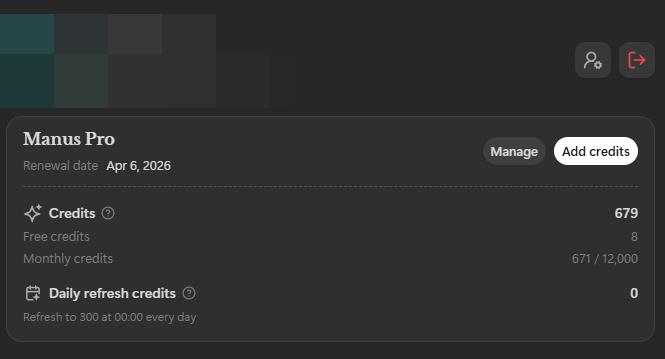
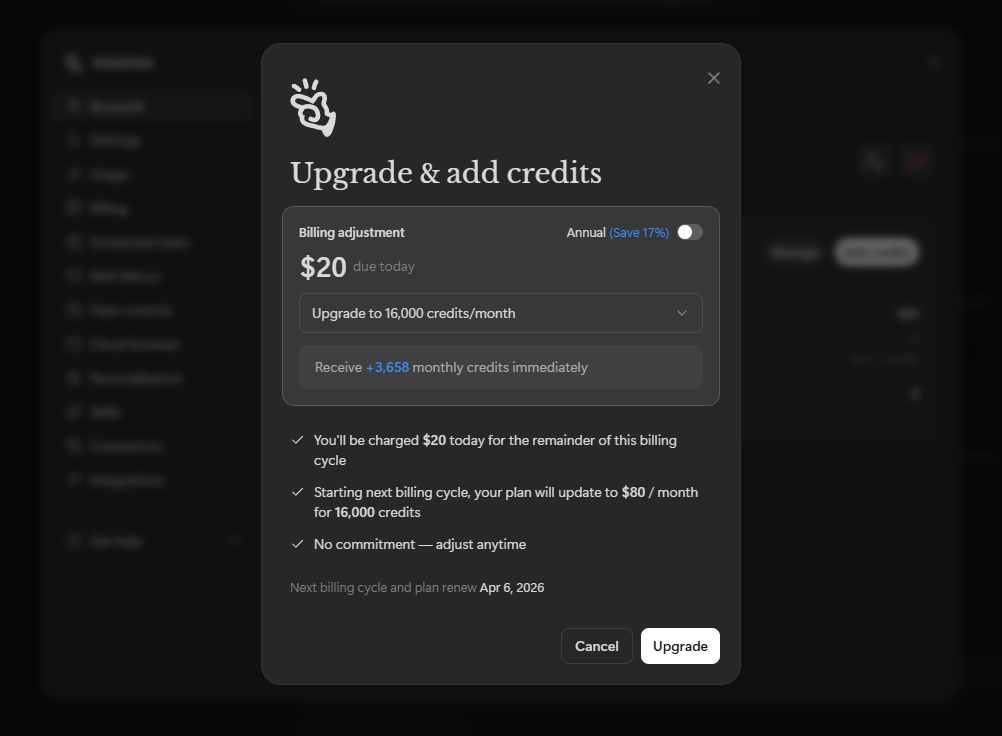
The issue centers around the way Manus structures its usage credits. Like many AI platforms, Manus operates on a monthly subscription model where each plan includes a set number of credits that reset every billing cycle. When users run out of credits, the platform offers the option to “Upgrade & add credits.” The wording implies that credits can be purchased independently, similar to how many digital services allow users to buy additional usage credits that remain in their account until spent. In reality, selecting the option upgrades the user to a higher monthly plan and grants credits associated with that plan for the remainder of the billing cycle.
How the Manus Add Credit System Actually Works
Under the current system, the Manus add credit option is effectively a prorated subscription upgrade. If a user on a lower plan selects the feature, the platform charges a small adjustment for the remaining days in the billing cycle and grants additional credits tied to the higher plan. When the next billing cycle begins, the account renews at the higher monthly price unless the user manually downgrades their plan before the renewal date.
This structure means the credits are not stored in a permanent balance. Instead, they are tied directly to the current subscription tier. When the billing cycle resets, unused credits disappear and the account receives the default credit allowance for whatever plan is active at that time.
For users who upgrade near the end of their billing cycle, the price adjustment can be extremely small because the charge is prorated. However, that also means the additional credits must be used quickly. If they are not used before the cycle resets, they vanish along with the temporary upgrade.
Why Users Say the Feature Is Confusing
The main criticism from users is not necessarily the subscription model itself but the way the feature is presented. The wording “add credit” creates the expectation that users are purchasing credits directly. When you tap a button that says “add credits” you are not expecting it to really mean “upgrade your plan.” In most digital platforms, buying credits means those credits remain in the account until they are spent but that is not the case here.

With Manus, the credits only exist as part of the upgraded plan. If the user downgrades their subscription or the billing cycle resets, the credits are removed. For users who believed they were buying credits that would stay in their account, this can come as a surprise.
The confusion is amplified by the interface, which highlights the number of additional credits users will receive immediately but does not clearly emphasize that the action changes the subscription plan and future billing amount.
Personal Experience as a Paying Customer
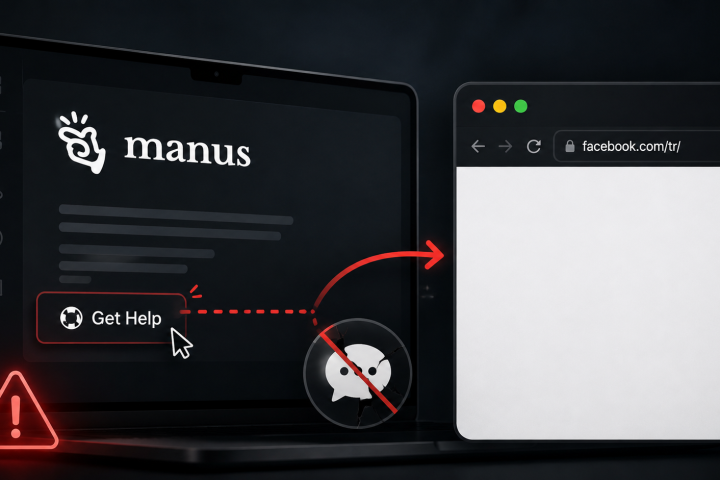
As a paying customer of Manus, I have experienced many of the same issues that other users have described. The platform’s billing design is not always obvious, and when questions arise, getting help can be difficult. I have contacted Manus support multiple times and unfortunately have never received what I would consider adequate customer support.
Messages often go unanswered for long periods of time. In some cases it has taken days or even weeks to receive a response. When replies do arrive, they are often brief and do not fully address the issue being raised. Follow-up messages frequently go unanswered.
One example involved a project I was building on the platform. At the time I was developing a game using Manus tools, and the system repeatedly failed to save my work properly. Checkpoints were not being created and the project kept reverting to older states. This was clearly an issue on the platform’s side rather than something caused by my own work.
It took roughly a month before Manus finally responded and fixed the issue. While the problem was eventually resolved, no explanation was provided and my follow-up message asking for clarification received no reply.
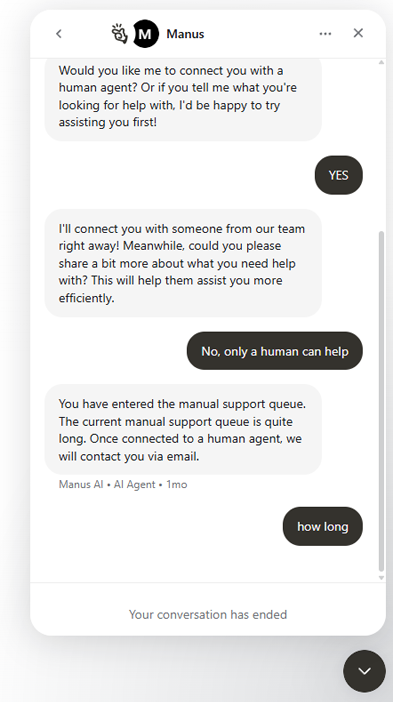
I have also encountered the same situation through Manus’s chat support system. In one case I requested to speak to a human agent and was told I had entered the manual support queue. After that message, the conversation ended without any real assistance being provided.
Support Concerns Add to Billing Frustration
Customer support becomes especially important when billing features are confusing. When users do not fully understand how a system works, they rely on support teams to clarify it. Without responsive support, those problems tend to escalate.
For users who encounter the Manus add credit feature and misunderstand how it works, the lack of timely support can make the experience even more frustrating. If credits disappear or billing changes unexpectedly and support responses take weeks, the situation can quickly damage trust in the platform.
Some users also say the support experience feels minimal or reluctant, with conversations closing quickly and limited opportunities for follow-up questions.
Credit systems are widely used across the AI industry because they allow companies to manage infrastructure costs and allocate computing resources. Many platforms reset credits each billing cycle rather than allowing them to accumulate indefinitely.
The difference often comes down to how clearly those systems are explained. When users understand that credits reset each month and are tied to subscription tiers, there is usually little confusion.
Problems tend to arise when interface wording suggests that credits are being purchased independently of the subscription plan. In those situations, the expectation created by the interface may not match how the billing system actually functions.
Why Transparency Matters
For rapidly growing AI platforms, transparency in billing and pricing systems is both essential and ethical. Today more than ever, companies should be striving for greater transparency and stronger ethical standards in how they design and present their products. Even small wording choices in an interface, whether deliberate or not, can shape how users interpret a feature. A label such as “add credit” obviously suggests the purchase of additional credits rather than a change to a user’s subscription plan.
If the goal of the feature is simply to upgrade a user’s subscription tier in exchange for more monthly credits, describing it clearly as a plan upgrade would eliminate much of the issues facing many Manus AI customers. Alternatively, the platform could allow users to keep the credits they believed they were purchasing rather than tying them to what is effectively a hidden subscription change. But it is difficult to ignore the possibility that the current wording exists for a reason.
The discussion surrounding the manus add credit feature highlights a broader challenge facing many AI platforms. As these services continue to expand, the clarity and transparency of their pricing models may become just as important to users as the technology itself.