Similar Content Scam – Fake YouTube Copyright Email Explained
What Is the “Similar Content — Possible Coincidence” Email Scam?
The Similar Content scam is an email scam that pretends to warn creators about copyright problems with their YouTube videos. The subject line often reads “Similar content — possible coincidence” and the message claims your video looks like something the sender uploaded earlier. At first glance, it looks like a small copyright dispute or misunderstanding. In reality, this is a phishing email scam designed to get you to reply, click links, or download malicious attachments.
Scammers have been using “similar content” subject lines for years. It is one of many email scams targeting YouTube creators with false copyright threats. These emails come from random addresses, often from free providers like @libero.it or @gmail.com, not from YouTube or Google. Thousands of these phishing emails circulate every month, and many creators report receiving several versions in a short time. Each message is slightly different, but they all share the same goal: to frighten you into engaging and eventually compromise your channel or personal accounts.
Example of the Scam Email
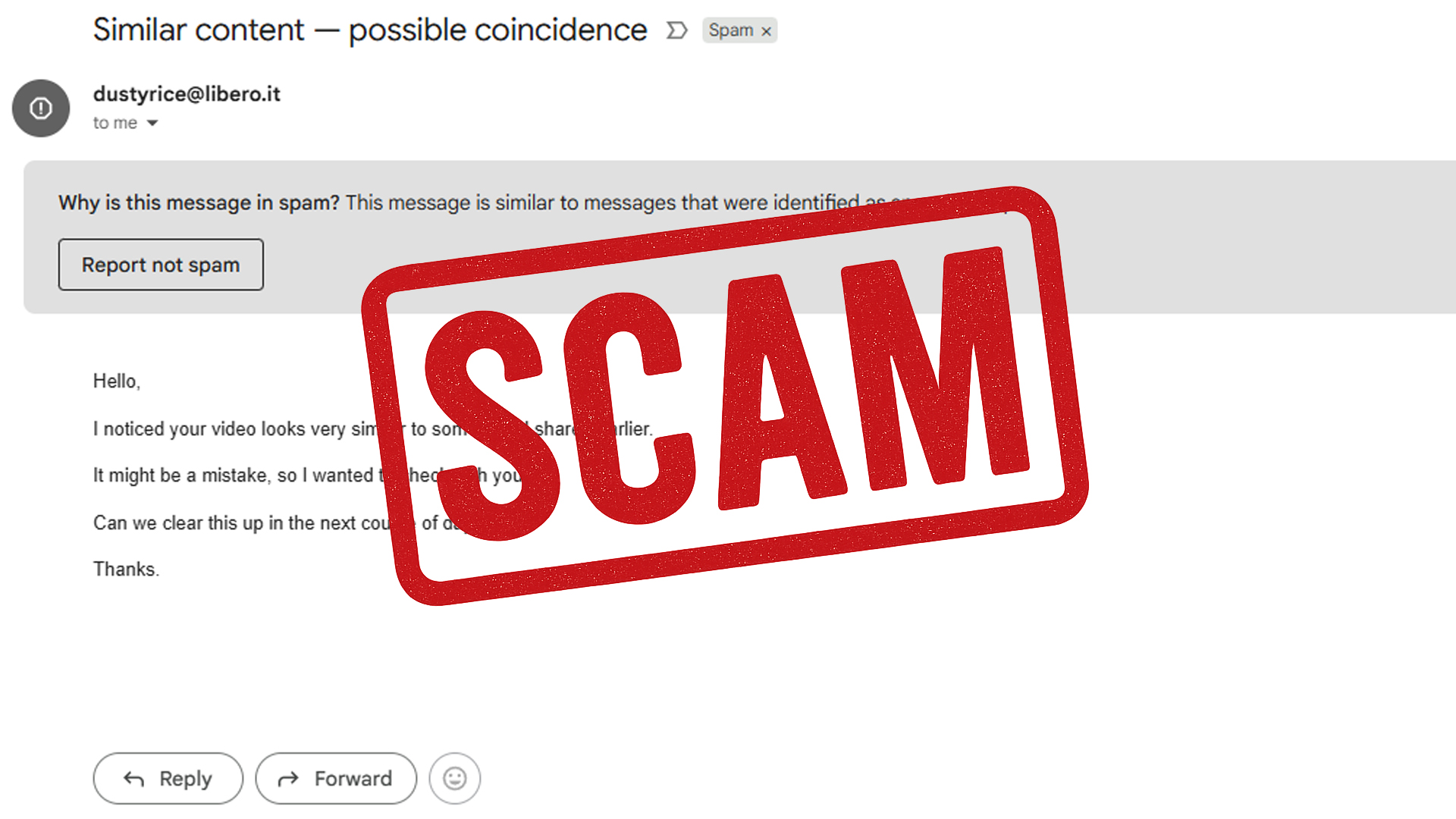
Here is one example of the Similar Content scam email currently being reported:
From: dustyrice@libero.it
Subject: Similar content — possible coincidenceHello,
I noticed your video looks very similar to something I shared earlier.
It might be a mistake, so I wanted to check with you.
Can we clear this up in the next couple of days?
Thanks.
This message is deliberately vague. It never identifies the video in question, provides no links to actual content, and uses casual wording like “clear this up in the next couple of days.” Legitimate copyright complaints include details, official links, and are always delivered through YouTube’s Content ID or official copyright strike system.
Why So Many Similar Content Emails Are Sent
The Similar Content scam is widespread because it works on fear. Creators rely on their channels for revenue, and the threat of losing monetization or being suspended is enough to make people panic. Attackers send these scams in bulk using automated mailing lists. They change the “From” name, rotate email domains, and alter subject lines to bypass spam filters. One scam might claim “possible coincidence,” another might say “video duplication,” while others simply accuse you of “using my content.”
These are all versions of the same scam. It is not limited to one sender or one style. Some scammers even pretend to be law firms or YouTube’s legal team. Others include fake case numbers to look official. By sending out thousands of these phishing emails to creators every day, scammers hope that even a small percentage of replies will lead to stolen credentials or infected devices. The Similar Content scam is just one example in a much larger wave of fraudulent copyright-related email scams.
How the Similar Content Scam Works
The scam relies on psychology more than technology. First, the scammer gets your attention with a copyright accusation. If you reply, they escalate by sending you a file or link that supposedly contains “evidence” of the infringement. That file often carries malware. Another variant directs you to a fake YouTube login page where your Google credentials are harvested. In more extreme cases, scammers threaten legal action or demand money to settle the “dispute.”
Because YouTube is strict about copyright strikes, many creators feel pressured to respond quickly. This is exactly what the scammers want. They count on urgency and fear to bypass your usual caution.
How to Recognize a Similar Content Email Scam
There are consistent red flags across these scams:
- Suspicious sender addresses: Real YouTube notices always come from
@youtube.comor@google.com. A random address like@libero.itis fraudulent. - Vague claims: The scammer never identifies the specific video or provides a clear link to the supposed content.
- Unprofessional tone: Phrases like “clear this up” or “possible coincidence” are casual and do not match the formal language of real copyright enforcement.
- No official notice: True copyright strikes appear in YouTube Studio and are tied to your account, not just your inbox.
- Urgency: The scam implies you must act in a short timeframe without giving you a way to verify details.
What to Do If You Receive a Similar Content Scam Email
If you receive a message like this, the safest option is to ignore it. Do not reply, do not click, and do not download anything. Use your email client’s report phishing option so that future scams are filtered out. After that, delete the message.
If you are worried, check YouTube Studio directly. Any real copyright complaints will appear in your dashboard with details about the claimant, the video in question, and instructions for counter-notices. YouTube does not rely on casual emails from random addresses to enforce policy.
What to Do If You Clicked or Responded
If you engaged with a Similar Content scam email, take action quickly to protect your accounts:
Botcrawl may earn a commission from purchases made through links in this article.
- Change your Google and YouTube passwords: Do this immediately if you entered credentials anywhere outside official YouTube or Google pages.
- Enable two-factor authentication: Secure your accounts with 2FA so that stolen passwords cannot be used alone.
- Scan your device for malware: If you opened a file or link, run a complete scan using reputable tools such as Malwarebytes. This will remove spyware, trojans, or other infections.
- Review account activity: Check your YouTube Studio and Google account for unusual activity, unfamiliar logins, or added permissions.
- Contact YouTube support: If you see suspicious changes to your channel, contact YouTube through official support for recovery assistance.
Why Awareness Matters
The Similar Content scam is just one of many fraudulent email scams aimed at YouTubers. Other scams pose as DMCA complaints, brand partnerships, or monetization offers. All of them exploit creators’ concerns to steal access or deliver malware. The best defense is awareness. Recognizing the patterns makes these scams easy to dismiss.
Stay informed by following ongoing scam alerts. Use strong passwords, enable two-factor authentication, and scan your devices regularly. A cautious approach will keep your channel and accounts safe.
The “Similar content — possible coincidence” message is not a real complaint. It is one variation in a long-running campaign of phishing and email scams. By ignoring these fraudulent emails and staying alert, you protect yourself, your content, and your community from future scams.