


The Roll Around virus (RollAround) is a term to identify adware that utilizes deceptive tactics to get onto a computer without knowledge and bombard internet users with pop-up advertisements based off of their browsing activities, bookmarks, history, and other data.

What is Roll Around?
Publisher Description: N/A
- Roll Around may bundle with third-party malware, malicious files, and potentially unwanted programs (PUPs), including UniDeals.
- Programs and browser attachments associated with Roll Around can read and change all your data on the websites you visit.
- Programs and browser attachments associated with Roll Around can read and change your browsing history.
- Programs and browser attachments associated with Roll Around can manage your apps, extensions, and themes.
- Programs and browser attachments associated with Roll Around can manage your downloads.
How does Roll Around get on a computer?
Roll Around is commonly contracted without knowledge alongside free downloadable content. This includes freeware, shareware, torrents, and even email attachments. In some cases Roll Around and other items are promoted through advertisements and will automatically download and install once an advertisement is clicked.
Users may also be given options to accept or decline an offer to install Roll Around adware and similar products during the installation process of third-party freeware; However, the user request to decline the program from installing is usually ignored or presented in a confusing manner,
How to remove Roll Around
- Step 1: Remove Roll Around add-ons and extensions
- Step 2: Uninstall Roll Around
- Step 3: Scan your computer for malware
- Step 4: Cleanup and repair settings
- For Tech Support Call: 1-888-879-0084
Step 1: Remove Roll Around add-ons and extensions
Google Chrome
1. Click on the Customize icon on the menu and navigate to More tools > Extensions.
2. Search for the Roll Around extension and other suspicious extensions in the list. Remove unwanted browser extensions individually by clicking the trashcan icon next to each one.
Mozilla Firefox
1. Type Ctrl+Shift+A.
2. On the Extensions and Plugin search for the Roll Around add-on and other suspicious add-ons and remove them if located.
Step 2: Uninstall Roll Around
1. Access Windows Start Menu and navigate to the Control Panel.
2. On Windows Control Panel, click Uninstall a program or Add and remove a program in the Programs section.
3. In the list of installed programs, search for Roll Around and other unwanted programs. Once an unwanted program is located, double click the unwanted program or select it with your mouse and click the Uninstall button.
4. Restart your computer.
Step 3: Scan your computer for malware
1. Download and install the free or full version of Malwarebytes Anti-Malware. The full version enables real-time protection to block malware and unwanted programs from infecting your computer, while the free version is just a free scan and removal tool.


2. Open the Malwarebytes Anti-Malware.

3. Click the large Scan Now button or visit the “Scan” tab to manually run a scan.
4. Once the malware scan is complete, click the Quarantine All button and reboot your computer.
Step 4: Cleanup and repair settings
1. Download and install the free or full version of CCleaner by Piriform.

2. Once installed, open the program and navigate to Cleaner > Windows/Applications and click the Analyze button. Afterwards, click the Run Cleaner button on the bottom right of the program interface.
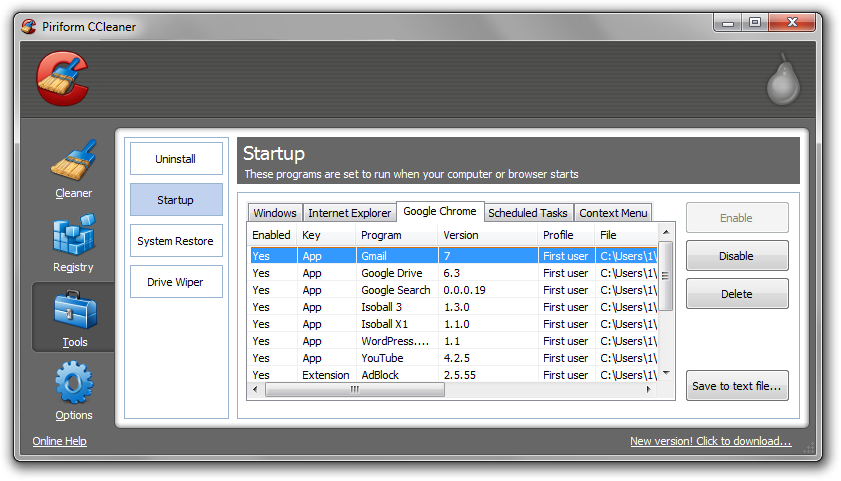
3. Next, navigate to Tools > Startup and search through each tab starting from windows, internet explorer, etc., all the way to Content Menu, for additional suspicious entries and click Disable and Delete once anything is found.
4. To automatically uninstall unwanted programs using CCleaner, navigate to the Uninstall tab and search for the program in the list of installed programs. Uninstall the unwanted software as selected by clicking the Run Uninstaller button.
- Vercel Breach Leaves Customers Rotating Secrets After AI OAuth Compromise
- Bluesky Confirms DDoS Attack After 313 Team Claims Responsibility
- EU Age Verification App Hacked With Little to No Effort in Public Demo
- Marion Correctional Institution Inmates Ran a Hidden Hacking Operation From Inside Prison for Months
- OpenAI Expands Trusted Access for Cyber With GPT-5.4-Cyber for Verified Defenders

Related Posts


