Microsoft has made it harder to change your default internet browser in Windows 10 and a lot of people, including Mozilla CEO, are not happy about it. If you upgrade to Windows 10 from Windows 7 or 8.1 you may notice that Microsoft Edge browser will override your current default browser settings and add itself as the new default web browser. Furthermore, if you run a third party-internet browser such as Mozilla Firefox, Google Chrome, Apple Safari, and others it may notify you that it is not the current default browser and may give you an option to change the setting; However, Microsoft 10 currently disallows a new window from appearing, making it hard to make the third-party browser your default browser in Windows 10, and instead wants Windows 10 users to manually change the default web browser via system settings.
RELATED: How to turn off Microsoft personalized ads
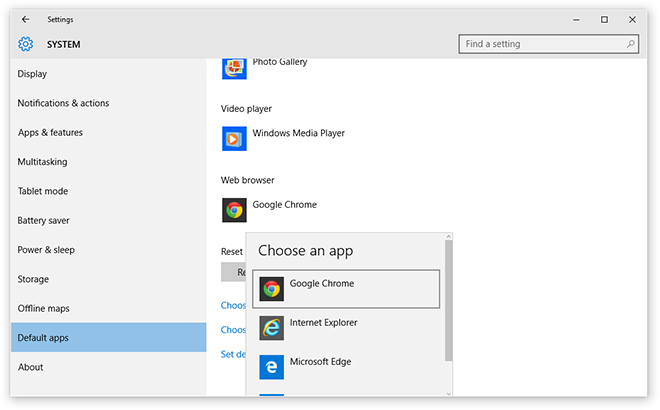
The instructions on this page will help you change the default web browser in Windows 10. By accessing system settings you can change Windows 10 default web browser.
1. Open Windows Start Menu and go to Settings.

2. Select “System” and go to Default apps.
3. Scroll down to the “Web browser” section, click on the current web browser icon, and select your new default Windows 10 browser from the list of installed internet browsers.