

The Anabuki Kosan data breach is now a confirmed incident after the Japanese real estate firm disclosed a ransomware infection that encrypted files on certain servers, followed by a later update confirming that some information assets were leaked. We are covering the incident in our data breaches reporting because ransomware cases involving real estate and housing related operations can create a long tail of fraud risk, including impersonation, payment diversion attempts, and targeted scams aimed at customers and partners.
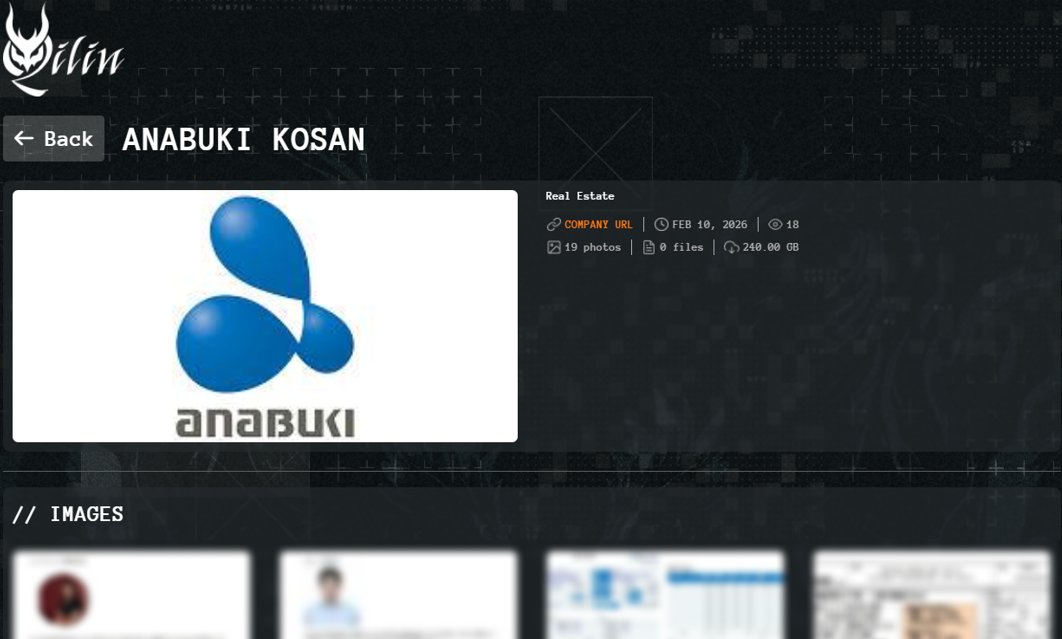
Anabuki Kosan first reported the ransomware incident after confirming on February 3, 2026 that files on some servers were encrypted, and it immediately isolated affected equipment from internal networks and the internet to contain spread. In a subsequent disclosure dated February 12, 2026, the company said it confirmed leakage of some information assets, while noting that the scope and content were still unknown and under investigation with external security specialists.
Background On Anabuki Kosan
Anabuki Kosan is part of the broader Anabuki Group and operates in Japan’s real estate sector, including apartment and condominium related businesses and real estate solutions. In practical terms, companies in this category routinely handle high volumes of personal and commercial information across multiple workflows, from property inquiries and viewings to contract administration, vendor coordination, and after sale support.
That operational footprint matters in a ransomware event because the risk is not limited to downtime. When attackers steal files before deploying encryption, the stolen material often includes identity data, contact directories, scanned documents, internal email threads, vendor invoices, and customer service records. Even when an organization resumes core operations quickly, the data exposure can be slow to quantify, and the secondary impacts can show up later as fraud attempts and impersonation campaigns.
What Anabuki Kosan Confirmed In Its Disclosures
In its initial disclosure, Anabuki Kosan stated it confirmed a ransomware incident after files on some of its servers were encrypted. The company said it isolated affected equipment from both its internal network and the internet to prevent spread, and it began investigating the scope of impact and recovery work. At the time, it said it was still investigating whether information had been leaked.
The company also indicated that core business operations were continuing, and it expected the impact on financial performance to be minor, subject to future updates if disclosure worthy matters emerged./p>
In a second report issued February 12, 2026, Anabuki Kosan said that based on the investigation status to date, “a leak of some information assets has been confirmed,” while adding it could not completely rule out leakage of other information. It emphasized that the scope and content of any leaked information had not been identified and remained unknown, and that it was continuing a detailed investigation.
Importantly for risk management, the company also warned about the possibility of suspicious emails or phone calls impersonating the company or its group, and explicitly stated it would never request changes to transfer destinations or payments solely via phone or email.
What The Qilin Ransomware Group Claimed
Separately from the company’s disclosures, the Qilin ransomware group has listed Anabuki Kosan as a victim. The listing has been described as involving roughly 240 GB of data, alongside a victim page layout consistent with other Qilin postings.
At this stage, the 240 GB figure should be treated as threat actor claimed volume rather than a confirmed measurement by the victim. Data volume claims can be accurate, inflated, or reflective of compressed archives and mixed file types. What matters from a defensive standpoint is that the victim has confirmed some degree of information leakage, which makes the possibility of exfiltration credible even if the exact scale remains unverified.
Why Real Estate Ransomware Events Create Unique Risks
Real estate and housing related organizations sit at an awkward intersection of high trust, high value transactions, and repeated contact with the public. That combination is attractive to threat actors because it creates opportunities for social engineering that feels legitimate. Attackers do not have to compromise bank accounts directly if they can convincingly impersonate a company and redirect payments, harvest credentials, or trick partners into sending sensitive documents.
In the context of an Anabuki Kosan data breach, the company’s own warning about impersonation attempts is a practical signal of what typically follows. When an incident becomes public, criminals often use that moment to send “security update” emails, fake password reset notices, or payment change requests, counting on heightened confusion and reduced verification.
This is one reason confirmed leakage can be more consequential than simple encryption. Encryption interrupts operations. Leakage creates a longer window for fraud attempts against customers, contractors, and business partners, especially if stolen data includes names, phone numbers, email addresses, internal signatures, invoice formats, or contract templates.
What Could Be In “Information Assets”
Anabuki Kosan has not publicly detailed what types of information were confirmed as leaked. That is common early in a response, especially when investigations are ongoing and the organization is balancing transparency against operational security concerns.
Still, the phrase “information assets” is often used as an umbrella term in incident disclosures and can include a wide range of material. In real estate and property management environments, the most commonly exposed categories in ransomware cases include customer contact information, property related communications, internal documents, employee data, vendor and partner contracts, and attachments exchanged during normal business processes.
Even if the leak does not include high risk identifiers like government issued IDs, a smaller set of seemingly mundane records can still power convincing scams. A single internal invoice template plus a list of vendor contacts can be enough for criminals to run payment diversion attempts. A set of customer service emails can be enough to craft realistic phishing lures that reference real properties, real staff names, and real ongoing discussions.
Operational Impact And What “Business As Usual” Can Mean
Anabuki Kosan stated its core business operations were unaffected and that it continued business as usual, while also noting that some equipment remained isolated as investigations and safety verification continued.
That combination is typical. Large organizations often segment systems so that a ransomware event affecting part of server infrastructure does not completely halt operations. However, “business as usual” does not necessarily mean all internal systems were fully restored immediately, or that all back office workflows remained unchanged.
In real estate operations, even partial outages can trigger workarounds that rely more heavily on email and manual processes, which can unintentionally increase phishing exposure. When staff are forced to rely on alternate channels or temporary procedures, verification can weaken, and attackers often exploit that gap.
Threat Actor Behavior And Why Qilin Listings Matter
Ransomware groups generally operate on an extortion model that mixes encryption, data theft, and public pressure. A victim listing is part of that pressure cycle. Some groups publish samples first, some publish countdown timers, and some hold data for private negotiation before releasing anything publicly.
While each group differs, the presence of a listing often signals that attackers believe they can force a response by threatening publication. It does not prove the full scope of claims. It does, however, increase the likelihood of downstream fraud attempts because other criminals monitor these leak sites and use the victim names as targeting lists.
If the Qilin group has in fact exfiltrated a large dataset, the risk can evolve over time. Even if nothing is published immediately, stolen data can be sold privately, traded, or used for follow on access attempts against partners and suppliers.
What Customers And Partners Should Watch For
Anabuki Kosan explicitly warned about suspicious emails and phone calls impersonating the company or its group and stressed that it would not request transfer destination changes or payments solely via phone or email.
This matters because payment diversion and invoice fraud are among the most common real world outcomes after a breach disclosure. These campaigns often look ordinary. The email signature looks right, the tone seems familiar, and the request appears time sensitive. The attacker’s goal is to get a recipient to skip verification and move money quickly.
Customers and business partners should treat any message that requests banking detail changes, urgent payments, or unusual document submissions as suspicious, even if the message appears to come from a known contact. Verification should happen through a trusted channel already on file, not through phone numbers or links included in the message.
Possible Initial Access Vectors
Anabuki Kosan has not disclosed how attackers gained access, and it said it would refrain from disclosing details about the ransomware from the perspective of preventing further damage and cooperating with related institutions.
In general, ransomware intrusions in corporate environments often begin through compromised credentials, phishing, vulnerable remote access services, or exploitation of internet facing systems. Once inside, attackers typically escalate privileges, map the network, and identify servers that contain file repositories and backups before triggering encryption and attempting exfiltration.
For organizations in real estate and property operations, the attack surface can include third party vendor access, remote work infrastructure, building management related systems, and shared collaboration portals. The right mitigation approach depends on confirming the actual intrusion path, which is why the company’s use of external security specialists is a standard step in response.
Mitigation Steps For Anabuki Kosan
In confirmed ransomware events with potential data leakage, the first goal is to establish the intrusion timeline, confirm the affected systems, and determine what was accessed or exfiltrated. The second goal is hardening, ensuring the same initial access cannot be reused. The third goal is communication, giving customers and partners practical guidance that reduces fraud risk.
- Complete forensic analysis to determine initial access, lateral movement, and whether data theft occurred before encryption.
- Rotate credentials across privileged accounts, service accounts, and remote access tools, and enforce phishing resistant multi-factor authentication where possible.
- Review and segment file servers and backups to reduce blast radius, and monitor for unusual archive creation or mass file access patterns.
- Implement strict outbound filtering and alerting for large data transfers from sensitive servers and administrative endpoints.
- Provide direct partner guidance on verifying payment instructions and reporting impersonation attempts, aligned with the company’s stated policy.
- Strengthen email security controls, including domain protection and anti impersonation measures, to reduce the effectiveness of spoofing campaigns.
Recommended Actions For Potentially Affected Individuals
Because the scope of leaked information has not been publicly identified, the safest approach for individuals is to assume that basic contact information could be involved and to focus on scam resistance. The most common near term threat is not immediate identity theft, but manipulation through emails, calls, and fake support interactions.
If you receive an unexpected message claiming to be related to Anabuki Kosan, avoid clicking links or opening attachments. Do not rely on contact details provided in the message itself. Instead, use official contact information you already trust.
Botcrawl may earn a commission from purchases made through links in this article.
If you suspect you interacted with a phishing attempt, change relevant passwords immediately and enable multi-factor authentication on email accounts and financial services. If you opened an unexpected attachment or installed anything as a result of such a message, run a malware scan using a trusted tool like Malwarebytes.
Broader Implications For The Sector
The Anabuki Kosan data breach highlights a pattern that continues across real estate, property management, and adjacent service providers. These organizations often maintain large volumes of sensitive communications and documents, while also coordinating payments across customers, vendors, and partners. That makes them attractive targets even when they are not holding classic financial datasets.
For the sector, the key lesson is that incident response must include fraud prevention guidance, not just technical containment. The company’s warning about impersonation attempts is a practical example of what customers and partners need to hear quickly.
We will continue tracking developments related to the incident, including any further disclosures from Anabuki Kosan and any verifiable evidence that expands the known scope of the leak.
For more coverage of confirmed incidents and ongoing ransomware activity, see our data breaches and cybersecurity reporting.
- ServiceNow Data Breach Exposes Customer Tenants to Unrestricted API Access
- GitHub Data Breach Confirmed After Poisoned VS Code Extension Exfiltrates Internal Repositories
- Vodafone Data Breach Claim Follows LAPSUS$ Data Leak
- Udemy Data Breach Resurfaces as 1.4M Records Circulate on Forum
- ClickUp Data Leak Shows $4B Came Before Customer Security for Over a Year

Related Posts