X Now Shows Country and Device Labels on User Profile Pages
X has begun rolling out a new transparency update that adds visible country and device labels to user profile pages. The change appears in a section titled About your account, which is accessible when users tap the Joined date on any profile. This update highlights the account’s region of origin and the device used to access X, instantly raising questions about privacy, authenticity, and how account metadata is handled on the platform. With many users noticing an unfamiliar line on their profiles, X account location has quickly become a trending topic of interest.
What the New Labels Show
The new About your account panel displays several details that were previously hidden from public view. These items provide a clearer look at how an account was created, how it is used, and which device and region were active during the most recent session. The labels currently include:
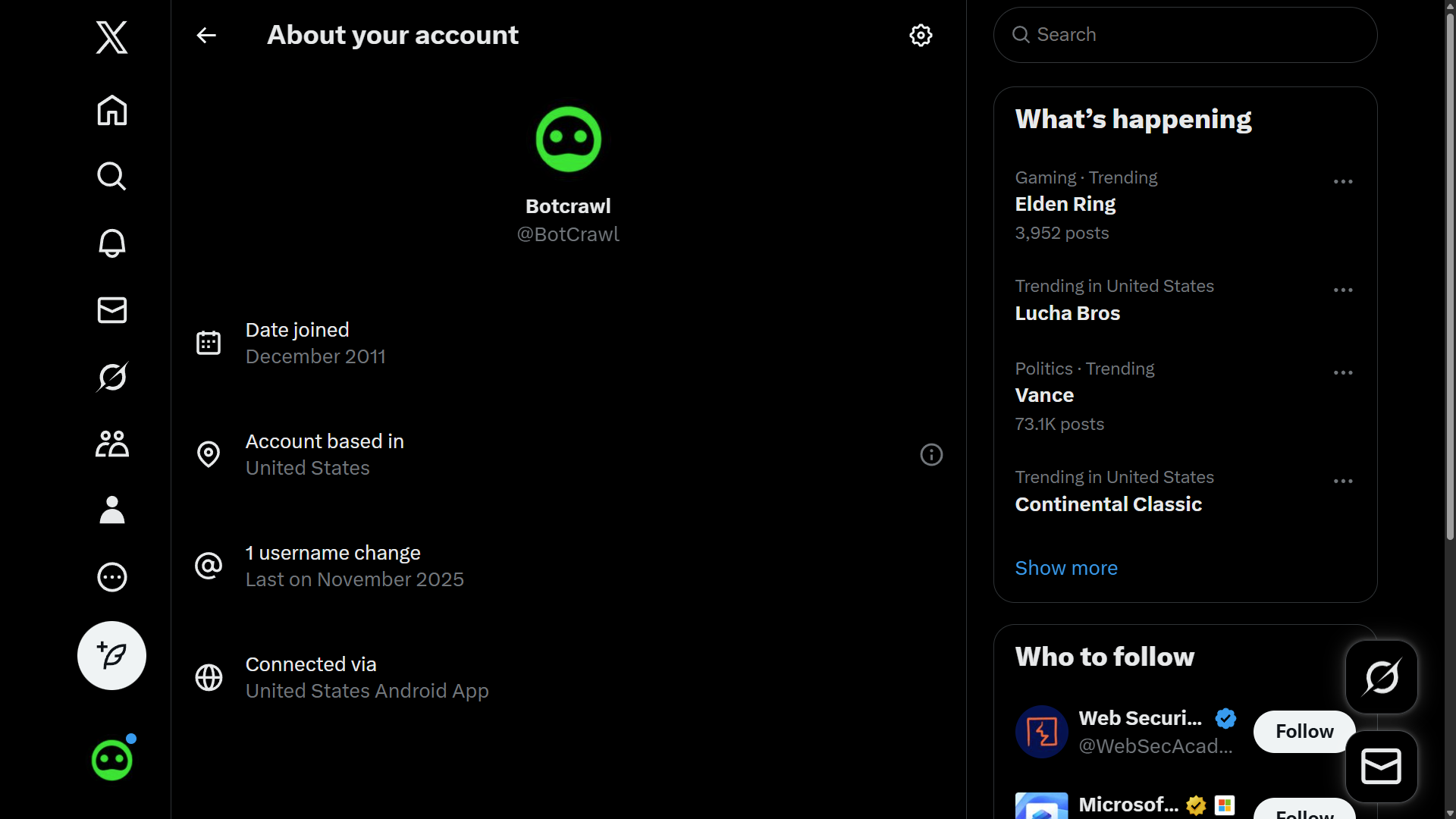
- Account based in: A country or region tied to the account’s long-term metadata.
- Connected via: The last used platform and associated region, such as United States Android App or United States Web App.
- Username changes: How many times the username was changed and the date of the most recent update.
- Date joined: The date the account was originally created.
The new country label is the most visible change and is already appearing across thousands of accounts. This has led to widespread curiosity about how X determines the correct X account location and whether it can be controlled by the user.
How X Determines Your Account Location
X uses multiple signals to determine the country or region displayed on an account. Early analysis suggests that X account location is based on a mix of factors, including device locale settings, app store region, historical login activity, and metadata associated with the account’s creation. Unlike IP address checks, which can change moment to moment, these deeper indicators reflect long-term account behavior.
The Connected via label appears to closely match the region of the device or app store used during the most recent login. For example, a user signing in from the X Android app with a United States app store region will see Connected via United States Android App on their profile.
New Privacy Settings and Region Controls
X has added a new section under Privacy and safety titled About your account. Here, users can choose whether their account displays a country-level location or a broader region or continent. The visible options include:
- Use Country
- Use Region / Continent
Although these settings exist, many users report that the result looks the same on their own profiles. This may indicate that the setting is still rolling out or that the region option only affects how others see the account, not how the user sees their own panel. Regardless of the setting used, X account location cannot currently be disabled entirely.
Why X Added These Transparency Labels
Platform leadership has stated that these updates are part of a broader transparency initiative. The goal is to help users identify suspicious accounts, discourage bot activity, and provide more context around accounts that participate in sensitive conversations or high-volume news cycles. Public country labels make it easier for users to evaluate whether an account claiming to be from one region is actually based somewhere else.
X is also testing additional indicators, such as notices related to VPN usage and accuracy disclaimers for accounts with inconsistent region signals. These additions show that the platform is moving toward more visible metadata and a higher level of accountability for all users.
Privacy Concerns and User Reactions
The rollout has triggered a wide range of reactions. Privacy advocates argue that revealing country-level information may pose risks to activists, journalists, and vulnerable users in high-risk regions. Others argue that the labels do not reveal specific location details and that country-level information is broad enough to maintain safety.
Many users simply want clarity about why their X account location is displayed incorrectly or why it does not match their current physical location. In most cases, these inconsistencies stem from old account metadata, app store regions, or long-term behavioral indicators rather than physical location.
Rollout Progress and What Comes Next
The transparency panel appears to be rolling out gradually across different regions. Some users can only view the About your account panel on their own profiles, while others can view it on all accounts. As the rollout continues, the region option may become more consistent, and additional transparency features may be introduced.
X has not issued a detailed public explanation or complete documentation for the new system, but user reports indicate that the update is already visible across a significant portion of the platform.
Final Notes
With X now showing country and device labels on user profile pages, the platform has taken a significant step toward increased transparency. For users, the new X account location label offers both clarity and new questions about privacy, region data, and how account information is determined. As the rollout continues, Botcrawl will follow updates to this feature and provide ongoing coverage in the Internet category.