

AsiaWBA Data Breach Exposes 56 GB Of Internal Operational And Business Partner Files
The AsiaWBA data breach is an alleged ransomware incident involving the theft and posting of 56 GB of internal documents belonging to AsiaWBA, a business alliance and regional enterprise services organization operating across multiple countries in the Asia Pacific region. The newly emerging TridentLocker ransomware group has added AsiaWBA to its early list of victims and claims to possess operational records, internal documentation, partner files, and administrative materials. A countdown on the group’s ransomware leak portal indicates that the attackers intend to publish the stolen data if negotiations do not progress within a set time frame.
The AsiaWBA data breach reflects the growing trend of ransomware groups targeting business alliances, regional consortiums, and organizations that coordinate cross border logistics, operations, supply chain functions, and business development. These organizations often maintain partner sensitive files, internal meeting materials, and strategic planning documents, making them high value targets for extortion. Because AsiaWBA appears to work with partner companies dispersed across several regions, the potential downstream impact of this breach may be significant.
Overview Of The AsiaWBA Data Breach
The first public indication of the AsiaWBA data breach appeared on the TridentLocker dark web portal. The listing identifies the organization by name, displays the associated archive size, and indicates that attackers exfiltrated 56 GB of internal documents. The group added a visible countdown clock, a tactic commonly used in double extortion attacks to pressure victims by threatening the release of sensitive data once the timer reaches zero.
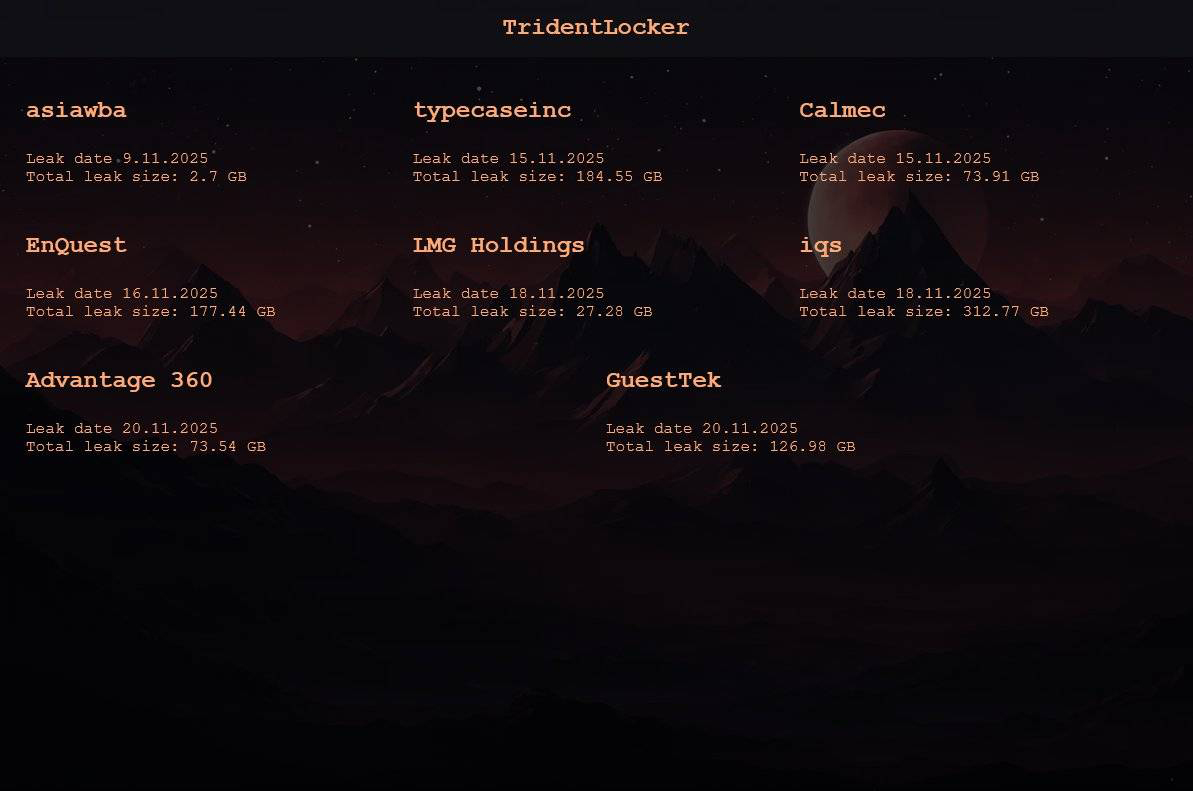
AsiaWBA appears to be involved in business association activities, partner relations, enterprise support, and regional operational coordination. Organizations of this type often maintain internal communication records, business development materials, partner agreements, strategic documents, and various operational files used to coordinate activities across multiple countries. If these materials were included in the stolen archive, the AsiaWBA data breach could expose sensitive information relating to partner identities, internal processes, and cross border operational strategies.
As of the time of writing, AsiaWBA has not issued a public statement addressing the alleged attack. In early stage ransomware incidents, it is common for attackers to post claims before the affected company has finished its internal investigation. The AsiaWBA data breach fits this pattern, with the threat actor attempting to establish credibility and control over the narrative before any official information is released.
The Role Of TridentLocker In The AsiaWBA Data Breach
TridentLocker is a newly surfaced ransomware group that recently published its first eight victims, including companies in manufacturing, engineering, marketing, hospitality technology, and business services. The AsiaWBA data breach represents one of the first confirmed incidents affecting an Asia Pacific based regional organization.
The group appears to follow a standard double extortion model in which attackers infiltrate internal networks, exfiltrate sensitive files, and threaten to leak the stolen material publicly. While the specific method of intrusion in the AsiaWBA data breach remains unknown, common entry points used in similar cases include phishing emails, compromised credentials, VPN vulnerabilities, misconfigured cloud services, and outdated web infrastructure. Once inside, attackers typically search for administrative servers, shared drives, and documents that hold strategic or operational value.
TridentLocker is attempting to establish credibility by posting multiple victims at once, including AsiaWBA. New ransomware operations often use early victims to signal capability, attract attention, and create pressure on other organizations that may be reviewing internal incidents. The AsiaWBA data breach aligns with this approach by presenting a sizable archive of stolen files and an explicit countdown meant to intensify negotiations.
What Data May Have Been Exposed In The AsiaWBA Data Breach
Although TridentLocker has not released public samples of the AsiaWBA data at the time of writing, the archive size and nature of the organization enable an informed estimate of what the stolen materials may contain. Business alliances and regional consortiums typically maintain internal administrative files, documentation from member organizations, and communication records that support cross border operations. The stolen materials may include:
- Internal business development documents, meeting notes, and strategic planning files
- Partner directories, onboarding documentation, and collaborative project materials
- Regional operational data, workflow documents, and cross border coordination files
- Financial records, invoices, internal forms, and administrative documents
- Internal emails, communication logs, and correspondence with partner organizations
- Vendor contracts, service agreements, and project proposals
- Technical documentation related to internal platforms or communication portals
- Employee information, HR files, or administrative personnel records
If partner related documentation or sensitive operational information was included in the 56 GB archive, the AsiaWBA data breach may expose information belonging to organizations across multiple sectors and countries.
How The AsiaWBA Data Breach May Impact Partners And Member Organizations
The AsiaWBA data breach may carry significant downstream effects for businesses, partners, and member organizations that rely on the alliance for coordination or support. Consortiums and business alliances often maintain sensitive information such as partnership agreements, internal communications, cross border project details, and strategic correspondence. Exposure of these documents can reveal competitive plans, operational challenges, or internal discussions that were never intended for public view.
Partners may also be at risk of targeted fraud. Attackers often use information stolen from alliance organizations to craft phishing messages that reference legitimate communications, joint initiatives, or known internal contacts. These messages are more convincing than typical phishing attempts because they rely on real data that recipients will recognize.
In addition, any exposed partner lists, directories, vendor relationships, or contact databases could be misused by threat actors or data brokers. This increases the likelihood of unsolicited contact attempts, spam, or attempted business email compromise schemes.
How The AsiaWBA Data Breach Could Affect Employees
Employees of AsiaWBA may face separate risks if internal HR files, payroll documents, or personal information were accessed during the breach. Shared administrative servers often store resumes, employee contact details, internal forms, and government issued identification documents. If such files were included in the stolen archive, employees may face risks such as identity theft or targeted phishing attempts that reference private internal information.
Internal communication or email archives may also be sensitive. Attackers sometimes publish internal dialogues or isolated messages to create pressure during ransom negotiations. Although this behavior is not yet confirmed in the AsiaWBA data breach, it has been observed in previous ransomware incidents involving regional and international business groups.
Legal And Regulatory Considerations
The legal obligations associated with the AsiaWBA data breach depend on the categories of data exposed and the jurisdictions in which affected individuals and partner organizations are located. Because AsiaWBA operates across multiple countries in the Asia Pacific region, notification requirements may vary significantly depending on the applicable regional privacy laws.
If personal information was exposed, AsiaWBA may be required to notify affected individuals and provide recommended steps to protect themselves. In cases involving partner data or business related documentation, organizations that provided that information may also need to conduct internal assessments to determine compliance obligations under their local laws.
Cyber insurance carriers may also require forensic evidence, incident documentation, and detailed recovery plans before processing claims. These requirements can extend the incident response timeline.
Why Regional Business Alliances Are Increasingly Targeted
The AsiaWBA data breach highlights a growing pattern in ransomware operations where attackers target business alliances, consortiums, and operational service organizations. These groups maintain valuable internal documentation, partner materials, and regional strategic data that attackers can leverage in extortion campaigns.
Organizations that coordinate multinational activities often store mixed categories of data on shared systems. This can include cross border project planning, sensitive business communications, or reference materials submitted by partners. Such environments are attractive targets because a single breach can produce significant volumes of sensitive information.
Regional organizations also serve as central points of communication for many independent businesses. If attackers compromise one alliance, the impact can extend across dozens or even hundreds of associated partners, amplifying the pressure placed on the affected organization.
Recommended Response Steps After The AsiaWBA Data Breach
If the AsiaWBA data breach is confirmed, the organization will need to follow a structured incident response process. This includes isolating affected systems, suspending compromised accounts, and preventing further exfiltration. Digital forensics specialists can then analyze logs to identify the intrusion method, determine which servers were accessed, and assess the scope of the stolen data.
Recovery may include rebuilding servers from clean backups, resetting credentials across the organization, applying security updates, and strengthening authentication systems. It may also involve reviewing internal access controls, modernizing outdated infrastructure, and deploying improved monitoring tools to detect suspicious activity.
Clear communication with partner organizations will be essential. Businesses that work with AsiaWBA will need information about the categories of data involved in the breach and recommended steps for mitigating their own risks. Some partners may request in depth assessments or security assurances before continuing regular operations.
What Partners Should Do After The AsiaWBA Data Breach
Partner organizations should monitor for unusual communication attempts referencing collaboration details, invoices, internal projects, or shared initiatives. Attackers may use information acquired from the AsiaWBA data breach to craft highly convincing phishing messages. Verifying unexpected requests through established contact channels is safer than responding to unsolicited messages.
Businesses may also need to review access controls, reset passwords on shared platforms, confirm user permissions, and audit past document exchanges to ensure that no sensitive materials have been misused. In some cases, companies may need to update internal documents or assess whether any proprietary information supplied to AsiaWBA was included among the stolen files.
Ongoing Monitoring And Future Outlook
The situation surrounding the AsiaWBA data breach is still evolving. Ransomware groups often release partial samples, extend deadlines, or publish full archives depending on the outcome of negotiations. Security researchers and partner organizations will be monitoring the TridentLocker leak portal for updates. Even if the stolen files are not released immediately, data from past ransomware breaches has reappeared months or years later in unrelated leaks or criminal marketplaces.


