
Elon Musk quote-tweeted a viral defense of himself after Brivael Le Pogam argued that Musk cannot be a Nazi or totalitarian because his critics are still allowed to call him a Nazi on X. Musk responded by saying, “The reason they call me a Nazi is to encourage people to murder me,” which turns criticism of his own public conduct into a claim that the people using the label are trying to get him killed.
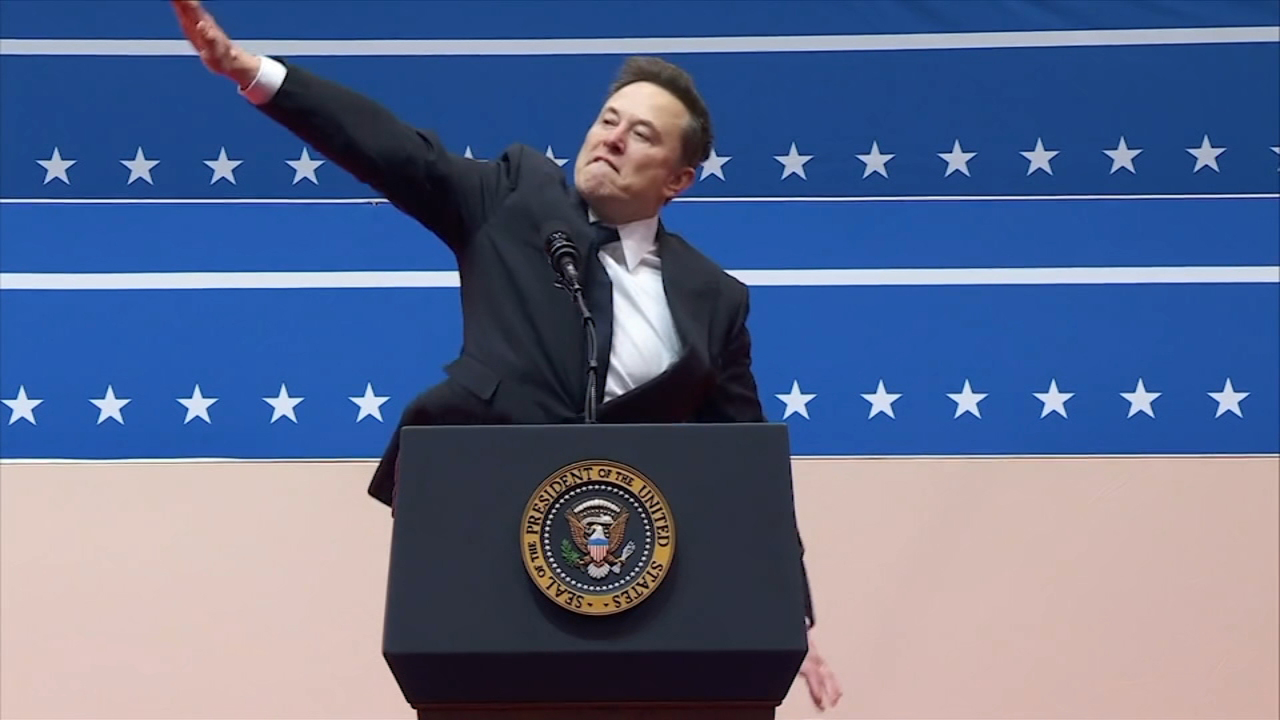
The defense Musk shared depends on a narrow idea of power. If Musk were actually totalitarian, the argument goes, he would ban the accounts calling him a Nazi from the platform he owns. That sounds simple until the actual criticism is put back into the article. People are not pointing to their ability to post insults on X. They are pointing to the straight-arm gesture at Trump’s inauguration event, the extremist reaction to that gesture, the “actual truth” reply to a post accusing Jewish communities of promoting hatred against white people, the white grievance politics, the racialized crime amplification, the support for Germany’s far-right AfD, the anti-trans campaign, the public treatment of Vivian Jenna Wilson, X becoming more useful to extremists and harassers, DOGE’s targeting of minority-related grants, Tesla’s racial harassment allegations, and Musk’s repeated habit of treating criticism as persecution instead of accountability.
What the Elon Musk Nazi Accusation Is Based On
The strongest criticism of Musk is not that he has publicly joined the historical Nazi movement or endorsed every part of Adolf Hitler’s ideology. The criticism is that Musk has repeatedly acted in ways that far-right, white nationalist, antisemitic-adjacent, anti-trans, and authoritarian audiences recognize, celebrate, or benefit from, while his own responses usually move the subject back to free speech, jokes, technical ambiguity, media bias, or his own victimhood.
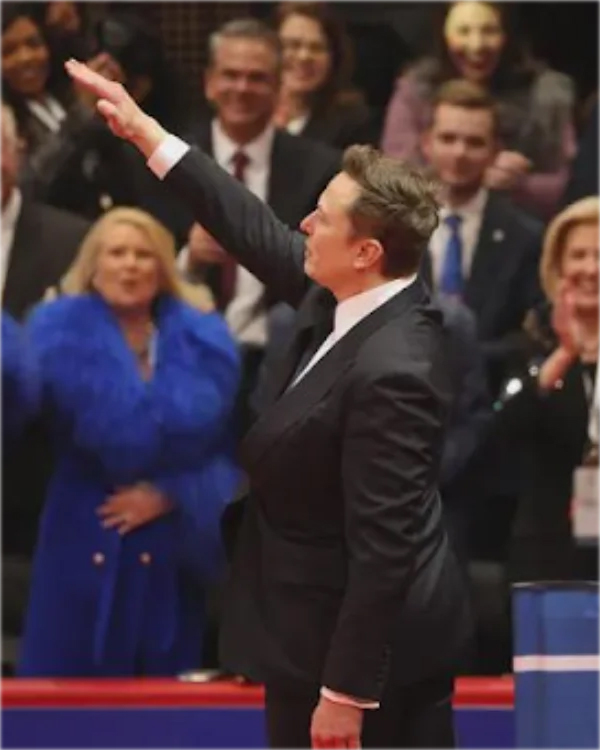
- Musk’s straight-arm gesture at Trump’s inauguration event became the most visible reason people connected him to Nazi or fascist symbolism. During Donald Trump’s January 2025 inauguration festivities, Musk placed his hand on his chest and extended his arm outward in a gesture that many viewers interpreted as a Nazi or fascist salute. The setting made the moment harder to dismiss because it happened onstage, in front of a crowd, during a political event celebrating Trump’s return to power, rather than in a private or casual setting where a strange movement would carry less public meaning.
- The gesture was celebrated by right-wing extremists, which made the reaction more serious than a normal argument over body language. A public figure can claim a gesture was awkward, accidental, or misunderstood, but when extremist audiences immediately treat the moment as meaningful, the issue is no longer limited to what Musk claims he meant. The people most familiar with fascist symbolism understood the image in a way that made the criticism more credible to everyone already watching his politics.
- Musk did not give the obvious correction after the salute controversy. He could have said the gesture looked wrong, rejected Nazi symbolism directly, and made clear that he did not want support from people reading it as fascist recognition. Instead, he mocked the criticism and left the moment in the same ambiguous space where extremist signaling often works: clear enough for supporters to celebrate, vague enough for defenders to deny, and useful enough to keep critics arguing over intent.
- The salute did not happen in a vacuum. It landed differently because Musk had already built a public record around anti-DEI politics, white grievance, anti-trans rhetoric, far-right accounts, and European nationalist politics. The gesture stayed attached to him because it looked like a visual version of politics people already believed he was promoting.
- Musk’s response to the salute followed the same pattern people criticize elsewhere. He provokes outrage, refuses a clean correction, mocks the people who noticed, and lets supporters argue that the real issue is hysteria rather than the conduct itself. That pattern is one reason the gesture did not fade the way a genuine mistake might have.
- Musk replied “You have said the actual truth” to a post accusing Jewish communities of promoting hatred against white people. That reply remains one of the clearest examples people cite when they argue that Musk has amplified antisemitic-adjacent rhetoric, because the original post framed Jewish communities as participants in hostility against white people.
- The “actual truth” reply fit the structure of Great Replacement-style politics. The post Musk endorsed placed white people in the role of targeted victims and treated Jewish people, minorities, immigrants, liberals, or institutions as forces acting against them. That structure is common in modern white nationalist and antisemitic conspiracy politics, even when the person sharing it avoids the most explicit neo-Nazi language.
- The problem with that reply was not ordinary criticism of a government, a policy, or a political movement. Musk endorsed a claim about Jewish communities and hatred against whites, which gave critics a specific example of him validating a claim that antisemites and white nationalists could recognize immediately.
- Musk later tried to repair some of the damage, but the original endorsement remained part of the record. Public gestures after the fact do not erase the initial amplification, especially when the same public figure continues to post and promote other claims tied to white grievance, demographic fear, and anti-DEI politics.
- Musk repeatedly frames white people as victims of institutions, media, immigration, DEI programs, and civil rights language. The issue is not that racism against white people can never be discussed. The issue is that Musk’s public race commentary often centers white resentment while treating minority-focused protections as corrupt, unfair, or dangerous.
- His anti-DEI politics often present diversity and equity programs as anti-white discrimination. That framing ignores why many of those programs exist in the first place, including documented discrimination against Black people, Indigenous people, immigrants, women, religious minorities, LGBTQ people, and other protected groups.
- Musk’s posts about demographics, immigration, birth rates, and Western civilization often overlap with white nationalist anxiety about replacement and decline. He does not need to say the most extreme version out loud for critics to notice that his framing repeatedly tells people that white populations, Western culture, and traditional hierarchies are being weakened by outsiders or hostile institutions.
- Musk’s race politics increasingly sound less like ordinary conservatism and more like white grievance politics. Ordinary conservatism can involve taxes, regulation, energy, courts, immigration, education, and government spending without constantly returning to the idea that white people are the real victims of modern society. Musk’s version keeps coming back to anti-white racism, DEI corruption, immigrant danger, media suppression, and the claim that institutions are rigged against the majority group.
- Musk frequently boosts crime stories involving immigrants, Black suspects, or other people of color. He often presents those incidents as evidence of media suppression, failed liberal policy, border collapse, or civilizational decline, which turns individual crimes into political symbols rather than treating them as individual crimes.
- He does not show the same consistent interest in crimes committed by white offenders. That imbalance matters because selective attention can create a false racial picture even when the individual stories being shared are real. The issue is not whether a specific crime happened. The issue is which crimes Musk chooses to make representative of a group.
- Racial propaganda does not need every highlighted crime to be fake. It can work by deciding which crimes represent a whole population, which offenders become symbols, which victims become useful, and which incidents are treated as isolated when the offender belongs to the preferred group.
- Musk’s crime amplification trains his audience to associate immigrants and people of color with rape, murder, theft, disorder, and national decline. Critics see that as racial curation rather than neutral concern about public safety because the same mass attention is not applied evenly across offenders, victims, or communities.
- The same pattern has been used by authoritarian and white-supremacist movements for generations. Highlight the crimes of the out-group, ignore or individualize the crimes of the in-group, and convince the majority population that it is under siege. Musk’s reach makes that pattern more dangerous because a racialized crime narrative shared from his account can reach millions of people and influence political conversation almost instantly.
- Musk promoted Germany’s Alternative for Germany party, commonly known as AfD, as the country’s best hope. That gives the Nazi comparison a direct European context because AfD is a far-right German nationalist party operating inside a country where far-right nationalism cannot be separated from the memory of Nazi rule.
- Musk hosted AfD leader Alice Weidel on X. The issue was not merely that a controversial figure was allowed to speak. Musk used his platform and celebrity to elevate the party’s leader before a large international audience.
- Musk appeared by video at an AfD campaign event. That moved his role from commentary into political support because he was no longer only posting about German politics. He was participating in a campaign environment for a far-right nationalist party.
- Musk spoke about preserving German culture and protecting the German people. In another setting, that language might be treated as generic patriotism, but in Germany, delivered to a far-right audience, it carries a heavier historical charge.
- Musk told the AfD audience there was too much focus on past guilt. In Germany, where public memory of Nazi crimes is central to the postwar political order, that kind of line sounds to critics like an attempt to weaken the historical guardrails around far-right nationalism.
- Musk was not only defending AfD’s right to exist. He was helping the party politically, which is why critics see the episode as one of the strongest reasons the Nazi-adjacent label sticks.
- Musk has repeatedly attacked trans identity, gender-affirming care, pronouns, school policies protecting trans students, and broader civil rights protections for LGBTQ people. The issue is not one policy disagreement. Trans people have become one of his recurring political targets.
- His use of the phrase “woke mind virus” turns trans identity and progressive politics into a disease metaphor. That language makes trans people and their supporters sound less like citizens with rights and more like symptoms of social infection.
- X removed explicit protection against targeted deadnaming and misgendering after Musk took over. That policy change made the platform less safe for trans users who were already common targets of harassment.
- Musk cited California’s trans-student privacy law as a reason to move SpaceX and X headquarters to Texas. The law was meant to prevent forced outing of students, and Musk’s response tied a major business decision to hostility toward protections for trans minors.
- His anti-trans politics treat trans people as evidence of cultural decay. That is why the criticism is not limited to people saying he is rude or politically conservative. Critics see him using a vulnerable minority group as a symbol for everything he wants his audience to hate.
- The Nazi comparison becomes sharper because Nazi persecution was not limited to Jewish people. The Nazi regime also targeted gay people, gender-nonconforming people, sexual minorities, and institutions connected to sex and gender research, which is why attacks on trans people are often discussed alongside broader far-right politics.
- Musk’s daughter Vivian Jenna Wilson is transgender. She legally changed her name and gender and sought to sever ties from Musk, making the family rupture part of the public record rather than a rumor about private tension.
- Vivian’s court filing said she no longer wanted to be related to Musk. That fact matters because the estrangement was not invented by critics. It was a legal step by his own child.
- Musk publicly discussed Vivian’s transition instead of protecting her privacy. A parent can have private pain, confusion, anger, or disagreement, but Musk made the issue part of his public campaign against gender-affirming care and progressive politics.
- Musk described Vivian’s transition as a kind of death. He said she had been “killed by the woke mind virus,” which turned his living daughter into an example for his anti-trans ideology.
- Musk misgendered and deadnamed Vivian while discussing gender-affirming care. Critics saw that as especially cruel because it came from her own father, not from a random anti-trans account.
- Vivian has publicly described Musk as absent, cold, cruel, and hostile toward her femininity when she was younger. Those claims intensified the bad-father criticism because they described a long family history, not only a political disagreement after she became an adult.
- Critics call Musk a bad father because he turned his child’s identity into political material. The issue is not only estrangement. The issue is that he used a private family rupture to support a public anti-trans campaign.
- The Vivian Wilson issue is one of the clearest examples of Musk refusing accountability. He frames the story as ideological loss, but critics see a parent who publicly humiliated his own child and then blamed an enemy movement instead of himself.
- Musk bought Twitter, renamed it X, and presented the takeover as a free-speech project. The defense sounds clean until the platform’s direction under his ownership is compared with the groups and narratives that gained more room to operate.
- Hate speech, harassment, and extremist content became more visible under Musk’s ownership. Research and reporting found increases in racist, homophobic, and transphobic content after the takeover, which weakened the claim that the platform merely became more open to ordinary political disagreement.
- Musk reinstated or elevated figures and narratives previously restricted for extremism, harassment, misinformation, or repeated rule violations. That made X more useful to far-right personalities who wanted fewer moderation barriers and more direct access to mainstream attention.
- Musk attacked anti-hate researchers and organizations while claiming to defend free speech. The free-speech position looked selective when criticism of bigotry, extremism, and platform deterioration was treated as an attack on Musk or X.
- The platform’s incentives under Musk reward outrage, racial panic, anti-trans hostility, and ideological escalation. Musk’s personal participation makes the problem larger because the owner of the platform is not only setting rules but also feeding the same political currents his critics are warning about.
- Letting critics call Musk a Nazi on X does not erase the platform’s role in spreading Nazi-adjacent politics. A platform owner can allow insults while still creating conditions that make extremists, harassers, and conspiracy accounts more powerful.
- DOGE moved the issue from speech into government power. Once Musk’s political project became tied to federal grant cuts, the criticism was no longer only about tweets, jokes, platform moderation, or personal ideology.
- DOGE used keyword searches and AI-assisted review to identify grants for termination. The terms used to flag grants were tied to race, sexuality, gender, immigration, religion, and minority identity, which made the process look ideological rather than neutral.
- Flagged terms included words such as gay, BIPOC, indigenous, tribal, immigrant, equality, and similar identity-related language. Those terms pointed directly toward the kinds of communities and histories already targeted by Musk’s broader anti-DEI politics.
- The process swept in grants connected to Black history, Indigenous culture, immigrant experience, women, LGBTQ subjects, Holocaust education, religion, and minority communities. That is why critics saw the cuts as an attack on public memory and minority scholarship, not only as budget discipline.
- A federal court found constitutional problems with the NEH grant cancellations. The court record gave critics a concrete reason to describe DOGE’s work as viewpoint discrimination and unlawful government action rather than ordinary fiscal oversight.
- Authoritarian movements often target schools, archives, museums, libraries, grants, and cultural institutions because those systems shape public memory. DOGE’s defenders called the process anti-waste work, but the use of identity-related keywords and AI review made the cuts look closer to cultural purging.
- DOGE gave people a reason to connect Musk’s online politics to material harm. When funding tied to minority history, religion, gender, immigration, and civil rights is targeted, the damage is not limited to arguments on X. People, institutions, programs, researchers, students, and communities lose support.
- Tesla has faced serious racial harassment allegations involving Black workers. Federal action and private lawsuits have described hostile conditions at Tesla facilities, making the issue part of Musk’s corporate record as well as his public political record.
- The EEOC sued Tesla over alleged racial harassment and retaliation. That added federal weight to claims that Black employees faced severe workplace conditions and that workers who opposed harassment were punished.
- Lawsuits and complaints have described slurs, racist graffiti, swastikas, nooses, and plantation or slave-house comments at Tesla facilities. Musk is not personally responsible for every alleged act by every employee, but he is the public leader and culture-setter of the company.
- Musk attacks DEI while his company has faced repeated allegations of anti-Black harassment. That combination makes his anti-DEI politics look less like a neutral fairness argument and more like indifference toward racism against minorities.
- Critics see the Tesla record as part of the larger racial pattern around Musk. He treats alleged racism against white people as an emergency, while racism alleged by Black workers inside his own company is more often denied, minimized, litigated, or ignored.
- Musk called British cave rescuer Vernon Unsworth “pedo guy” after Unsworth criticized Musk’s proposed mini-submarine during the Thai cave rescue. Musk won the defamation case, but the episode remains part of his reputation for using massive reach to smear people who insult or reject him.
- Musk spread and later deleted an unfounded claim about the attack on Paul Pelosi. That episode showed how quickly conspiracy material can move from fringe spaces into a massive mainstream audience when Musk chooses to amplify it.
- Musk has spread or amplified election misinformation. His claims fit a broader pattern of distrust toward democratic institutions, voting systems, immigrants, and media sources that challenge his political worldview.
- Musk has attacked journalists, researchers, regulators, former employees, political opponents, and private individuals from one of the largest accounts on X. The problem is not only the insult itself. The problem is the scale of the account, the swarm that can follow, and the power imbalance between Musk and the people he targets.
- Musk often treats cruelty as comedy and backlash as censorship. That style rewards followers who imitate the cruelty while letting Musk claim victimhood when the target or the public reacts.
- The size of Musk’s platform makes his recklessness materially different from ordinary posting. A claim from him can move markets, shape policy debates, harass private people, influence elections, and push conspiracy theories into mainstream discussion.
- Musk allowing critics to call him a Nazi on X does not prove the accusation is false. Tolerating insults is not the same thing as answering the conduct behind the insult.
- A platform owner can allow criticism because it drives engagement. Conflict keeps users posting, replying, quote-tweeting, and arguing, which benefits the platform even when the criticism is aimed at the owner.
- A platform owner can allow criticism because it strengthens a victim narrative. Musk often uses backlash as proof that he is under attack, which means visible criticism can become politically useful to him.
- A platform owner can allow criticism because banning every critic would look worse. The fact that critics remain on X does not prove Musk has no authoritarian tendencies, no extremist audience, and no accountability problem.
- The defense Musk shared only addresses whether he bans every critic. It does not address the salute, the “actual truth” reply, the AfD support, the anti-trans campaign, DOGE’s grant targeting, X’s platform direction, Tesla’s racial harassment allegations, or his treatment of Vivian Jenna Wilson.
- Musk’s murder claim moves the moral burden away from his conduct and onto the people criticizing him. It makes the accusation sound like the source of danger while leaving the public record untouched.
Musk’s defenders are not defending nothing. Tesla helped push electric vehicles into the mainstream, SpaceX changed the private space industry, Starlink has mattered in places where communication was fragile, and Musk has made patent, open-source, and free-speech moves that supporters treat as proof he is working on something bigger than himself. That is the strongest version of the defense, and it should be acknowledged honestly. The problem is that none of it works as a moral reset button.
For many critics, the good does not erase the rest of the record because the bad is not limited to rude jokes, personality flaws, or normal political disagreement. They are looking at the straight-arm gesture, the extremist celebration of it, the “actual truth” reply, the white grievance politics, the racialized crime amplification, the AfD support, the anti-trans campaign, the public treatment of Vivian Jenna Wilson, DOGE’s targeting of minority-related grants, X’s turn toward extremist-friendly politics, Tesla’s racism allegations, and Musk’s habit of treating accountability as persecution whenever the criticism gets too specific.
That is why Musk’s claim about people trying to get him murdered does not answer the criticism. A person who acted violently against him would be responsible for that violence, but the anger around Musk did not come from the word “Nazi” appearing on X. It came from years of things he has done, said, promoted, funded, enabled, mocked, and refused to answer for, including conduct critics believe has harmed real people, damaged public institutions, pushed vulnerable groups into danger, and made extremist politics more acceptable to a massive audience.
Calling Elon Musk a Nazi did not create the backlash around him. The backlash was already there because people had a record to point to. Musk wants the accusation treated as the dangerous thing, but for many people the danger is the conduct behind it: the politics, the platform, the family cruelty, the government influence, the racial grievance, the anti-trans campaign, and the refusal to take responsibility when any of it is challenged.
- RadiusDC Phoenix Outage Caused by Major Cooling Failure
- Mark Zuckerberg’s Phone Number Leaked in Instagram Password Reset Flaw
- Discord Down for Some Users as API Errors Hit Login and Messages
- Google Health Shows Where Big Tech Wants Wellness to Go
- U.S. Soldier Charged Over Polymarket Bets While Congress Still Gets to Trade Stocks

Related Posts