Mark Zuckerberg’s Phone Number Leaked in Instagram Password Reset Flaw
Mark Zuckerberg’s phone number was leaked after Instagram’s web password reset flow exposed full account recovery details instead of masked hints. The flaw turned Instagram’s recovery screen into a lookup path for private contact information, including phone numbers and email addresses tied to user accounts.
The Mark Zuckerberg phone number leak became the clearest example because it involved Meta’s own CEO becoming a victim of their lax security. Screenshots showed recovery details tied to Zuckerberg’s Instagram account, including phone and email information that should never have been displayed in full before account ownership was verified.
Mark Zuckerberg’s phone was not stolen and it was not hacked. The exposure came from Instagram’s own password reset workflow, which is supposed to protect recovery data while helping the real account owner regain access.
A password reset screen can safely show limited hints, such as a partly hidden email address or a partly hidden phone number. That allows the account owner to recognize the recovery option without giving outsiders the full value. Instagram exposed the full recovery data, which changes the issue from a normal reset prompt into a privacy failure.
How the Instagram Password Reset Flaw Worked
The flaw was in Instagram’s web-based password reset flow. A public username could be entered into the reset process, and the recovery screen returned account contact details that should have remained masked. Instead of showing partial hints, Instagram exposed full phone numbers and email addresses tied to accounts.
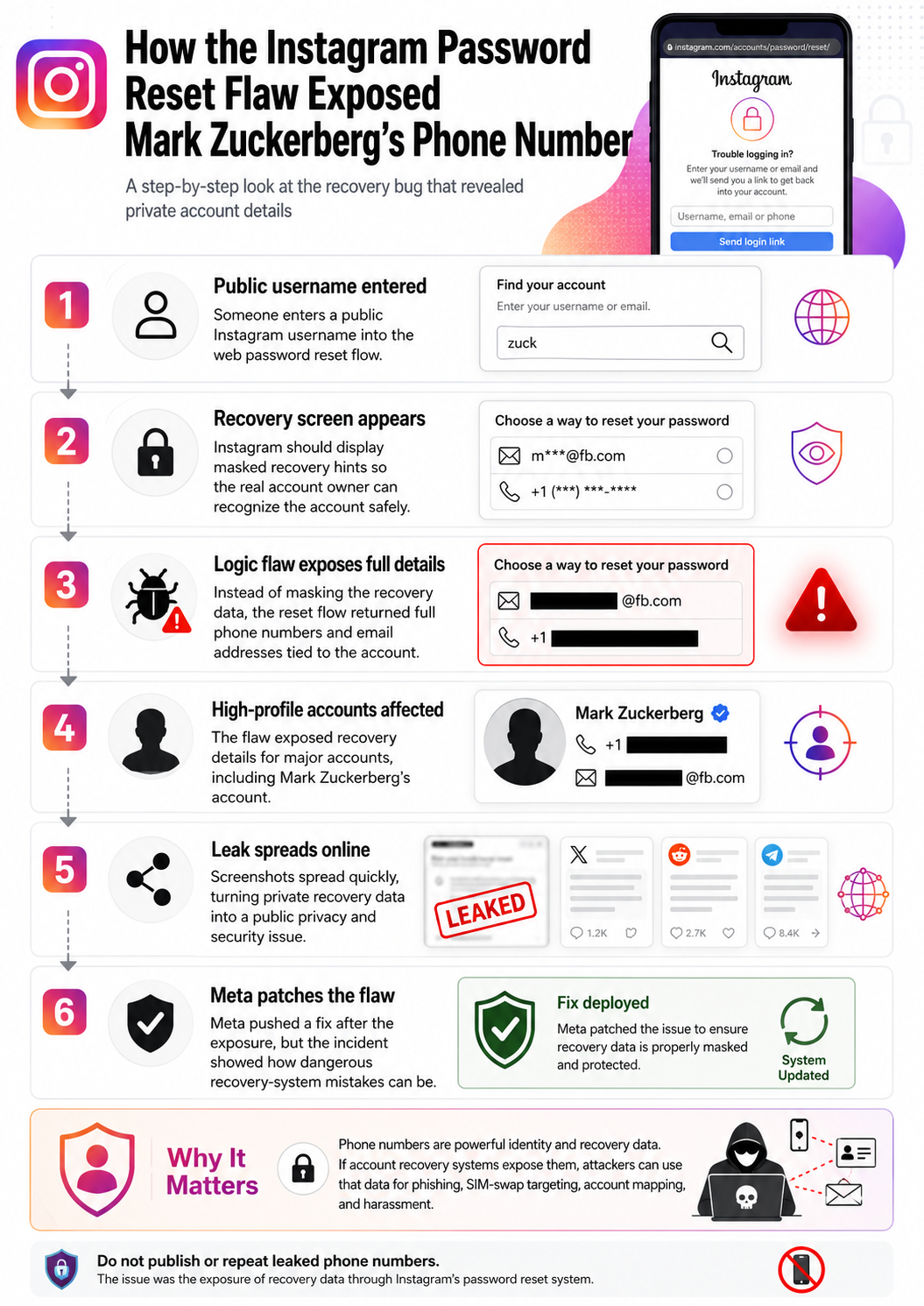
The failure fits a recovery logic flaw. Instagram already had the recovery data, but the system returned too much of it before the person requesting the reset had proven ownership. A proper reset flow should confirm that recovery options exist, then require proof through an existing email, phone number, trusted device, authenticated session, or another ownership check before any sensitive detail is exposed.
Responsibility for discovering the flaw has not been clearly established.
The issue also points to risk inside shared account systems. Instagram, Facebook, WhatsApp, and Meta account services rely on recovery data, identity matching, phone numbers, email addresses, support tools, and account-security workflows. When a recovery flow exposes private account data, the damage can move beyond one app because the same phone number or email address can be used to search, target, or map accounts elsewhere.
A phone number is not harmless profile data. It can be used to identify accounts, search other platforms, target password reset flows, send phishing messages, attempt SIM-swap fraud, enable targeted spam campaigns, support harassment, and connect a person to services they may not have intended to expose publicly.
That is why the Mark Zuckerberg phone number leak is more than an embarrassing moment for Meta. The exposed data came from a system users are expected to trust for account security. If a recovery flow reveals the same phone number it asks users to provide for protection, the recovery system becomes part of the risk.
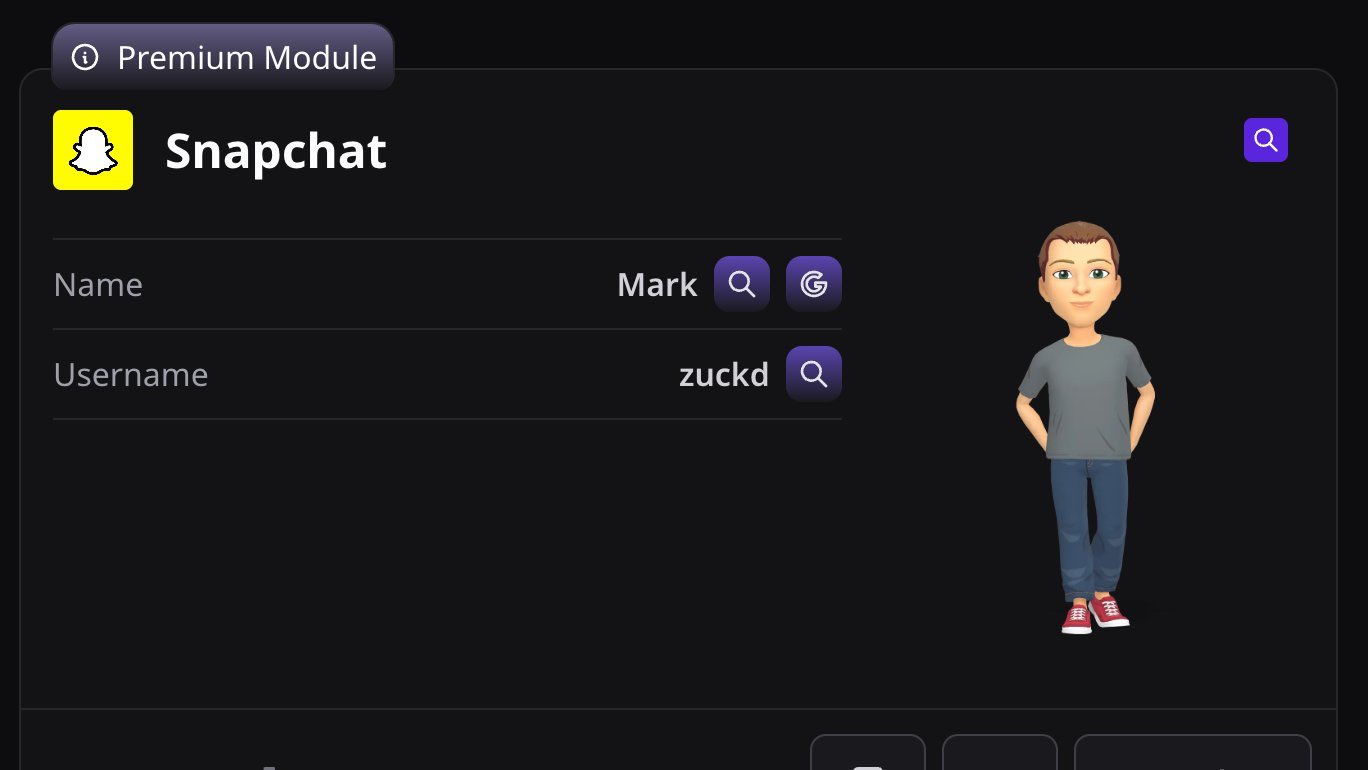
Screenshots circulating after the exposure showed how leaked phone data can become a pivot point. One lookup result showed a Snapchat account using the name Mark and the username “zuckd.” It does not require publishing Zuckerberg’s number, and it does not require claiming ownership of every account returned by a lookup tool. It shows how exposed phone data can be used to search across platforms and connect accounts.
For ordinary users, the same kind of exposure can create account takeover risk, spam, harassment, phishing, and identity mapping across apps. For high-profile users, it creates a cleaner path for targeted abuse, impersonation, SIM-swap attempts, and attacks against other accounts tied to the same recovery details.
The flaw also creates a trust problem around account recovery itself. Users give Meta phone numbers and email addresses because Meta asks for them during login, recovery, verification, and security checks. Those details should not be exposed to someone who only knows a public username.
What Meta Needs to Fix
Meta should treat the Zuckerberg phone number leak as an account recovery failure, not a minor display bug. Instagram’s reset flow exposed sensitive recovery data before ownership was proven, and that requires a wider audit of recovery logic, internal support tooling, and shared account systems across Meta products.
Recovery data should be masked before it reaches the client. A browser should not receive a full phone number or full email address and then rely on the visible interface to hide it. If the full value is returned before authentication, the system has already leaked the data.
- Mask all recovery phone numbers and email addresses server-side before returning them to any reset screen.
- Block username-based recovery enumeration that exposes account contact details.
- Rate-limit reset attempts by username, IP address, device, session, and request pattern.
- Detect bulk lookups against high-profile users and ordinary accounts.
- Separate phone numbers from public account discovery wherever possible.
- Require stronger ownership proof before showing, modifying, or acting on recovery options.
- Audit recovery logic across Instagram, Facebook, WhatsApp, and Meta support tools.
- Review access logs to identify which accounts had full recovery details exposed.
Meta should also notify users whose recovery details were exposed through the flaw. A fast fix does not answer who was looked up, what information was shown, or whether the exposed data was used for account mapping, harassment, phishing, or other targeting.
Mark Zuckerberg’s phone number leaked because Instagram showed private recovery data where only masked hints should have appeared. Meta did not need a data breach for this to become a privacy failure. Its own password reset system exposed sensitive account data, and its own CEO became the example that made the failure impossible to ignore.