James Williams Controversy Raises New Questions About NBA Officiating and Betting
I had not watched a full NBA game since the 2021 NBA Finals, but that all changed during the 2026 playoffs when I picked up the TV remote and changed the channel to Suns-Thunder Game 2. While sprawled across my couch, doomscrolling whatever I could find on the internet and side-eyeing the game, it all seemed okay at first. Calls seemed about even on both sides, and nothing looked too strange. Then a flurry of oddly timed technical fouls were assessed against the Suns, and the entire game started to feel different.
These technical fouls were no ordinary technical fouls. In fact, they were not actually technical fouls at all, which was later confirmed by the league when they were rescinded. That left a sour taste in my mouth and made my skin crawl, perhaps it gave me anxiety, perhaps rage, but it was an all too familiar place I had been before and never wanted to visit again. It was an NBA game that looked rigged.
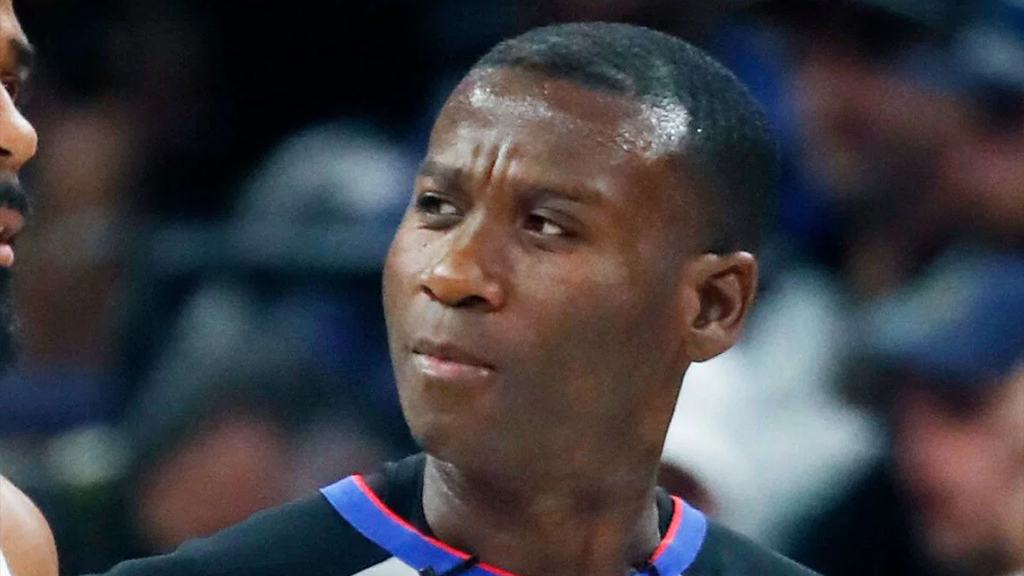
The technical fouls assessed against the Suns were clearly not technical fouls, and no one in their right mind would ever think they were before or after they were called. One particular technical foul stood out, and the controversy became tied to James Williams after Devin Booker called him out by name. Williams is an NBA referee with 16 years of experience and a co-founder of RefMasters, a training platform for sports officials. That experience makes the situation harder to excuse, not easier.
After that, X users began circulating alleged old posts from Williams celebrating and cheering for the OKC Thunder, and according to those posts, he is also a Lakers fan. Being a fan is not a bad thing. But being a fan and making calls that are clearly wrong to anyone with eyes, in favor of a team you appear to like, just does not sit right. I cannot sit here and say for sure that James Williams rigged Game 2 of the playoffs between OKC and Phoenix just to appease his inner fanboy, but I would not be surprised if fans are asking that question.
Why would someone like James Williams be connected to such an obvious bad call that can weigh on the outcome of an NBA playoff game? Why would anyone make a call that obvious in that moment? One could speculate that someone involved was betting against the Suns or associated with someone, or a group of people, who were. Maybe Game 2 of the playoffs between the Suns and Thunder was just cash day for someone, and while I am not saying that is what happened, the question is not crazy when the calls look that bad.
At first, the betting angle may not make sense. If you bet $100 on OKC to win, you would have only won about $5 in profit. If you bet $100 on the Suns to win, you would have won about $1,100 in profit, but the Suns lost. There really is not much to gain from OKC simply winning unless you understand the spread angle.
This is where traditional sports betting takes a back seat and prediction markets, aka casinos, come into play. According to prediction-market data, the betting angle was not that Phoenix had to win the game. It was that Phoenix only had to keep the game close. OKC was a heavy favorite, so betting on the Thunder to win paid very little, but the spread was around Suns +17.5 or +18.5, which meant Phoenix could lose and the bet would still win as long as the Suns did not lose by 18 or 19 points.
That is exactly what happened. OKC won 120-107, but the Thunder only won by 13. OKC moneyline bettors won a tiny payout, while Suns spread bettors made the better winning bet. In plain terms, a person did not need the Suns to win to profit from a Suns-side bet, they only needed OKC to win by less than the spread.
I am not saying that is what happened, but it certainly needs to be investigated when obvious wrong calls are assessed and look suspicious. A report needs to be made, and an investigation needs to happen internally or by a legitimate third party. Even if no betting occurred, these types of bad calls cannot be made during a professional basketball game in the playoffs by an official with 16 plus years of experience who co-founded a training platform for sports officials.
As Devin Booker said, “In my 11 years, I haven’t called a ref out by name but James (Williams) was terrible tonight, through and through. Bad for the sport, bad for the integrity of the sport. People are going to start viewing this as the WWE if they aren’t held responsible.” Booker also stated during an interview, which you can see occur from some camera angles, “I heard Caruso tell ’em to call the tech and (the official) ended up doing it.” Caruso is a former Lakers player, which only added another weird layer to a sequence that already looked terrible.
The NBA fined Booker $35,000 after he called out referee James Williams by name and said the officiating was bad for the integrity of the sport. Booker said people were going to start viewing the league like WWE if officials are not held responsible, which is exactly how a lot of fans felt watching that game. The part the NBA cannot explain away is what happened next. The league said it found no basis for bias or misconduct, but it also rescinded Booker’s technical foul because it was improperly assessed.
Booker’s technical was not a close call. Anyone watching the game knew it was not a real technical foul. Booker was fouled, tried to save the ball while falling out of bounds, and somehow ended up being punished after Alex Caruso appeared to lobby for the call. The call looked bad live, looked bad on replay, and was so bad that the league had to erase it the next day.
An NBA official like James Williams should know what a technical foul is, even my niece and nephews with no officiating experience do. This was not a block-charge call at full speed or a fingertip out-of-bounds review. This was basic. For anyone to look at that sequence and think it deserved a technical, they either do not understand what a technical foul is or they had another reason for making the call, which is why Booker was angry and why fans were angry too.
The hypocrisy got worse because Booker’s technical was not the only one that came back. Reports said the technical fouls on Dillon Brooks and Lu Dort from the same game were also rescinded. So the league’s position is basically this. There was no bias, no misconduct, and nothing improper about the officials, but multiple technical fouls from the same playoff game were bad enough to be wiped away later.
That does not protect the integrity of the NBA, it makes the league look worse. Booker paid $35,000 for saying what people could already see and what needs to be fixed. The NBA punished him for questioning the officiating, then quietly admitted that at least part of the officiating was wrong. That is not accountability, it is cleanup after the damage is already done.
James Williams Has Been Tied to Other Controversial Calls
I decided to look into this further and figure out how many times James Williams has been tied to controversial calls that may have swayed the outcome of a game. And wow, NBA. Wow. Here are some that I was quickly able to find and put into a list:
| Game | What happened | What the NBA or officials later said |
|---|---|---|
| Suns vs. Thunder Game 2, 2026 | Devin Booker called out referee James Williams after a game with multiple controversial technical foul calls. | The NBA rescinded Booker’s technical foul, but said it found no basis for claims of bias or misconduct by the officials. Booker was still fined for criticizing the officiating. |
| Pistons vs. Knicks, Feb. 26, 2024 | A late collision involving Donte DiVincenzo and Ausar Thompson went uncalled with about eight seconds left. | Williams, serving as crew chief, admitted after review that a loose-ball foul should have been called on DiVincenzo. |
| Celtics vs. Pacers, Jan. 8, 2024 | A foul was called on Buddy Hield against Jaylen Brown with 3.2 seconds left, then overturned after review. | Williams explained that the call was overturned because Hield hit the ball. The NBA’s Last Two Minute report later said the overturn was correct, although it found other late-game errors in the same finish. |
| Thunder vs. Jazz, Jan. 18, 2024 | Oklahoma City challenged an out-of-bounds and jump-ball ruling late in the game. | Williams’ crew ruled the challenge successful, but possession still went to Utah while Oklahoma City kept its timeout and challenge. |
| Hawks vs. Magic Play-In, 2025 | Trae Young was ejected after receiving two technical fouls. | Williams defended the second technical in the pool report, saying Young kicked the ball away and was “making a mockery of the game.” |
| Wolves vs. Lakers, 2025 | Anthony Edwards was ejected after receiving two technical fouls. | Williams explained that the second technical was called because Edwards directed profanity toward an official. |
| Lakers vs. Heat, 2023 | D’Angelo Russell was ejected after receiving two technical fouls. | Williams explained that the first technical was for an overt gesture and the second was for vulgarity. |
In the last couple of years, it was easy to find late calls that were later overturned, controversial ejections, and calls that looked suspicious or may have influenced the outcome of a game. That becomes even harder to ignore in the sports betting era, especially when sports betting is legal in the state where James Williams reportedly resides, Illinois.
Sports betting has been legal in Illinois since June 28, 2019. That is when Illinois’ Sports Wagering Act took effect. Actual legal betting started in 2020, but the law date is June 28, 2019. Illinois has not clearly legalized sports prediction markets at the state level. Instead, the Illinois Gaming Board has treated sports prediction-market operators as unlicensed sports wagering businesses, sending cease-and-desist letters to Kalshi, Crypto.com, and Robinhood on April 1, 2025, and Polymarket on January 27, 2026. But they still exist in Illinois despite pushback, so do with that information as you will.
James Williams Should Not Get a Pass
Booker said he had never called out a referee by name in 11 years. That matters because players complain about calls all the time, but this was different. Booker named James Williams and said he was terrible through and through. He did not hide behind vague complaints or normal postgame frustration, he said the quiet part out loud.
James Williams is not a rookie official who got overwhelmed by a playoff crowd. His NBRA profile says he has worked hundreds of regular-season games, dozens of playoff games, and multiple NBA Finals games. That experience makes the Game 2 officiating look worse, not better. A referee with that much experience should not be connected to technical foul calls that fans, players, broadcasters, and the league office can see are bogus.
I am not going to pretend I have access to James Williams’ bank account or betting history. I do not. But I am also not going to pretend the officiating looked normal. It looked intentional to me, and the Booker technical especially looked intentional because it was too obviously wrong to be brushed off as a normal mistake.
Maybe the explanation is bias, maybe it is arrogance, maybe it is incompetence, or maybe it is something worse. Whatever it is, James Williams should be nowhere near another playoff game until the league can explain how a call that obvious happened in the first place. Fans have also been digging through social media claims about Williams and possible past favoritism toward Oklahoma City and the Lakers, and while random screenshots on X are not proof by themselves, the fact that fans are even searching for that material says plenty about where the NBA’s credibility is. People do not trust the whistle because the league keeps giving them reasons not to.
The Gambling Question Is Not Crazy Anymore
The NBA does not get to act offended when fans bring up gambling because the league already lived through Tim Donaghy. Donaghy was not a meme, and he was not a conspiracy theory. He was an NBA referee who pleaded guilty in federal court to conspiracy to commit wire fraud and conspiracy to transmit gambling information. That happened inside this league, and once a referee scandal like that happens, every ugly whistle after it lands differently.
That does not prove James Williams bet on Suns-Thunder Game 2, but it does mean the NBA has no right to treat fans like idiots when they ask why a playoff game looks crooked. If a technical foul is so bad the league has to erase it the next day, people are going to wonder why it was called in the first place. If three technicals from the same game get rescinded, people are going to wonder what the officials were doing. If the calls keep tilting the same way, people are going to wonder whether the league has a referee problem, a gambling problem, or both.
Sports betting makes all of this worse because the NBA is not operating in the same world it was twenty years ago. Betting odds are everywhere, player props are everywhere, live markets are everywhere, and gambling ads are everywhere. Every foul, free throw, technical, ejection, and minute restriction can move money. The league cannot wrap itself in gambling money and then act shocked when fans connect suspicious officiating with betting concerns.
Jontay Porter already showed that NBA betting integrity is not some old problem locked in the Donaghy era. The league banned Porter for life after finding he disclosed confidential information to sports bettors, limited his own participation for betting purposes, and bet on NBA games. That was a player case, not a referee case, but it proves the modern NBA is still vulnerable to gambling pressure. Other sports have had to deal with this too, including Major League Baseball, which fired umpire Pat Hoberg after a gambling investigation even though MLB said it found no evidence that he bet on baseball directly or manipulated games. In Germany, referee Robert Hoyzer was sentenced to prison for fixing soccer matches in a betting scandal, which is exactly why officials influencing games for money is not something fans invented because they were mad online.
The League’s Response Made Booker Look Right
The NBA’s response almost made Booker’s argument for him. The league said there was no basis for bias or misconduct, fined him, and then rescinded the technical that helped set him off. Reports also said the technical fouls on Brooks and Dort were rescinded from the same game. That is a wild sentence no matter how the league tries to dress it up.
If multiple technical fouls from a playoff game are wrong enough to erase, then the officiating was not fine. If the officiating was not fine, then Booker had every right to say something. The league can fine him because it has the power to fine him, but that does not make him wrong. It only makes the league look more interested in punishing criticism than fixing the problem.
Fans are tired of this routine. A bad call happens, a player complains, the league protects the official, the player gets fined, and then the league quietly fixes the call afterward like everyone is supposed to forget the damage was already done. That might work for the standings sheet, but it does not work for trust.
The NBA wants fans to believe the games are clean, but it keeps treating referee accountability like a public relations problem. Officials rarely have to stand there and answer questions the way players do. Pool reports are limited, explanations are often thin, and the league can take back a call the next day even though the player already lost the possession, the emotion, the momentum, or the game. That is why fans get angry, because it is not only about one call, it is about watching officials affect games and then watching the league act like the only person who did anything wrong was the player who said something.
I Stopped Watching the NBA Because of Games Like This
This is not coming from some lifelong Suns fan who thinks every call against Phoenix is a crime. I grew up in Los Angeles watching Kobe. I am a Lakers fan. I have seen my own favorite players get favorable whistles over the years, and I can admit that. That is part of why this bothers me, because I know what it looks like when the whistle starts feeling like part of the product instead of part of the game.
The last time I felt this way about the Suns was the Finals against Milwaukee. That series had some of the worst officiating I remember watching, and it was part of why I stopped watching the NBA as closely. I turned this Suns-Thunder game on years later and got the same feeling again. It was not normal frustration or playoff physicality, it was the feeling that the whistle was shaping the game instead of the players.
Booker was right to be mad, and fans were right to be mad. The technical fouls were bogus, and the league admitted as much by rescinding them. The only thing the NBA really punished was the player who had enough nerve to say what the game looked like, which is exactly why people are losing trust in the league.
Fans Need to Be Louder
The NBA needs to fix this before more people tune out, and fans should not accept referee shows just because the league office tells them everything is fine. Fans should clip the calls, post the sequences, demand pool reports, demand explanations, and demand that officials who make obvious bogus calls in playoff games are held out of major assignments until the league can explain what happened. That does not mean harassment or threats. It means accountability.
Referees demand respect from players, and they should, but respect cannot be a one-way street. If an official makes calls that damage the game, players and fans should be allowed to say so without the league pretending criticism is the real integrity problem. The NBA has a referee problem, whether the explanation is bias, arrogance, incompetence, or something worse, and Suns-Thunder Game 2 made that impossible to ignore.
Devin Booker did not damage the NBA’s integrity by saying what he said. The league damaged its own integrity when multiple technical fouls from the same playoff game were bad enough to be rescinded, while the player who called it out was the one who got punished.