
Anthropic has started rolling out identity verification inside Claude, adding a government ID check for some users as part of what it calls safety, compliance, and platform integrity measures. The company’s updated help documentation says the prompt will appear only in a few use cases, including access to certain capabilities and situations triggered by routine integrity checks or other safety and compliance reviews.
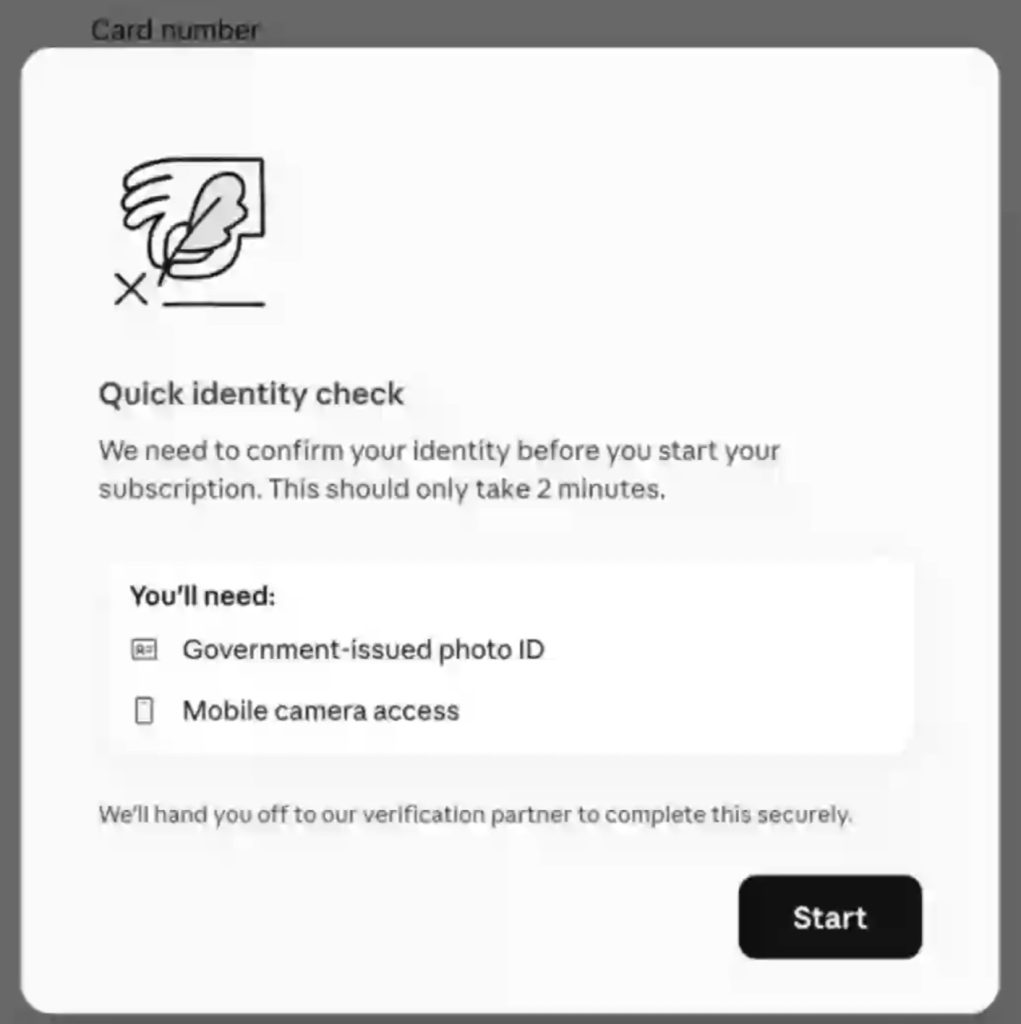
That means Claude is no longer purely a sign-up-and-type product for everyone who lands there. For at least some users, Claude now includes a KYC-style gate that asks for a government-issued photo ID and, in some cases, a live selfie before access continues. Anthropic says the process is meant to prevent abuse, enforce usage policies, and meet legal obligations.
The change matters because it touches a fault line that has been coming for a while. AI companies want wider adoption, more enterprise credibility, and tighter control over misuse at the same time. Those goals do not always fit neatly together. Once an AI platform starts asking for identity documents, the product stops feeling like an anonymous or lightly pseudonymous tool and starts looking more like a gated service with formal identity rules behind it.
What Anthropic Changed Inside Claude
Anthropic’s help center says the verification rollout is limited, not universal. The company describes it as applying to “a few use cases,” and says users may see the prompt when accessing certain capabilities, during routine platform integrity checks, or because of broader safety and compliance measures. That wording leaves the door open for Anthropic to widen or narrow the requirement over time without having to present it as a sitewide rule.
The mechanics are straightforward. Claude users who are selected for verification are told to provide an original, physical government-issued photo ID and use a phone or computer camera. Anthropic says the process usually takes under five minutes. Accepted documents include passports, driver’s licenses, state or provincial ID cards, and national identity cards from most countries. It does not accept screenshots, scans, photocopies, digital IDs, non-government IDs, or temporary paper IDs.
Anthropic has chosen Persona Identities as its verification partner. That is where the phrase Claude Persona is likely to start showing up in search behavior and user complaints. The verification layer is not being handled entirely inside Anthropic’s own interface. It is being handed off to a third-party identity platform that specializes in document checks and fraud screening.
How Claude ID Verification Works
Anthropic says Persona collects and holds the ID and selfie, not Anthropic’s own systems. Anthropic describes itself as the data controller for the verification data, while Persona processes that data on Anthropic’s behalf. Anthropic also says it can access verification records through Persona’s platform when needed, such as for an appeal, but says it does not copy or store the ID images itself.
That is an important distinction, but only up to a point. From a user’s perspective, the practical outcome is still the same: a real identity document and biometric-style image check are now part of the Claude experience for some people. Moving the images to Persona instead of Anthropic may reduce direct storage on Anthropic’s side, but it does not remove the sensitivity of the process. It just changes where the most sensitive artifacts are held and who processes them first.
Anthropic also says the verification data is not used to train Claude, that it asks only for the minimum information required to verify identity, and that the data is not shared for marketing, advertising, or unrelated third-party use. It says Persona is contractually limited to verification support and fraud prevention, and that the data is encrypted in transit and at rest.
That will reassure some users. It will not reassure everyone. Privacy-minded Claude users are not only worried about ad targeting or model training. Many are worried about the existence of the identity chain itself. Once an AI platform requires government ID, the risk discussion changes. The concern becomes less about whether Anthropic will train on the data and more about whether a new identity repository now exists, who can access it, how long it is kept, what legal demands can reach it, and what happens if any part of that chain is breached or mishandled.
Why Claude KYC Will Get Pushback
The backlash to this move is easy to understand even if the rollout stays limited. A lot of people do not think of an AI chatbot the same way they think of a bank, a crypto exchange, or a regulated financial service. When Claude starts asking for a passport or driver’s license, the request can feel disproportionate to the product, especially for people who use AI for writing, coding, brainstorming, and everyday research rather than high-risk or heavily regulated workflows.
That is where the phrase Claude KYC starts to matter. Anthropic does not use that label in its official help article, but users probably will. It captures the emotional and political objection in one phrase. KYC is associated with identity checks, reduced anonymity, regulatory pressure, and large databases of personal information. Even when Anthropic frames the change as a limited safeguard, a portion of the public will read it as the first serious step toward identity-gated AI access.
There is also a trust problem underneath the policy language. Anthropic is asking users to believe several things at once: that the rollout is narrow, that the data is handled carefully, that the process exists for legitimate safety reasons, and that the company will not gradually normalize broader identity checks across the product. Some people will accept that. Others will see the change as a precedent rather than an exception.
For developers and power users, the reaction may be even sharper. These are people who often value speed, low friction, pseudonymous access, and portability between AI tools. If Claude starts feeling more restrictive, more surveilled, or more bureaucratic than alternatives, that can change behavior quickly even without a full boycott. Users do not always leave over one policy. They leave when one more policy confirms a broader feeling that the product is moving in the wrong direction.
What Anthropic Says the Verification Is For
Anthropic’s official explanation is blunt. The company says identity verification helps it prevent abuse, enforce its usage policies, and comply with legal obligations. It also says the rollout may appear as part of safety and compliance measures or routine platform integrity checks.
That framing tells you what Anthropic sees as the problem. It is not treating identity checks as a convenience feature or optional account hardening tool. It is treating them as part of trust and enforcement. In other words, Claude ID checks are being positioned as a way to decide who gets access, who keeps access, and which accounts deserve closer review.
Anthropic also makes clear that passing verification does not shield a user from enforcement. Its support article says accounts may still be banned for repeated usage policy violations, account creation from unsupported locations, terms of service violations, or under-18 usage.
That part matters because it shows Claude identity verification is not just about confirming that a person exists. It sits inside a broader moderation and access-control framework. The company is not simply trying to know users better. It is trying to bind identity, access, and enforcement more tightly together.
What Claude Users Should Take From This
Anyone using Claude should now assume that identity verification is part of the platform’s direction, even if they have not seen the prompt themselves. Anthropic’s language leaves room for expansion, and once the infrastructure is in place, it becomes easier for a company to apply it to more features, more plans, more geographies, or more categories of flagged behavior.
Users who are uncomfortable with that should think clearly about what the policy means before they hit a verification wall. The real question is not whether Persona is reputable or whether the flow takes five minutes. The question is whether you are comfortable linking a government-issued identity document to your Claude usage at all.
For users who do proceed, the main practical points are simple. Anthropic says you need an original government photo ID, a camera-enabled device, and a few minutes to complete the process. If verification fails, the company says users can retry, check the quality of the document, or contact support.
For Anthropic, the business risk is not hard to see. Claude may gain more control over abuse and compliance, but it may also lose goodwill among users who saw AI chat as one of the last major software categories that did not demand identity papers for basic access. That tradeoff may prove worthwhile for Anthropic. It may also turn out to be one of the more unpopular product decisions the company has made this year.
Claude ID verification is still being presented as a selective rollout, not a universal requirement. But the line has been crossed. Anthropic has now built a formal identity-check layer into Claude, connected it to Persona, and tied it to safety, compliance, and access control. Whether that remains a narrow safeguard or becomes the start of a broader KYC-style future for consumer AI is the question users are really reacting to now.
- Manus Removes Customer Support From Its App
- Manus Shutdown Will Take Customer Websites and Apps Offline
- Meta Cuts Ties With Manus After China Orders Reversal of $2 Billion AI Deal
- Claude Fable 5 Jailbreak Exposes Weakness in Anthropic’s Guardrails
- Manus AI Has a Refund Problem, Not Just a Product Problem

Related Posts