Libero.it redirection virus and browser hijacker
Many internet users have complained about the Libero redirection virus and internet browser hijacker. Libero.it and it’s related URLs such as Arianna.Libero.it have been reported to hijack internet browser settings without the computer user’s consent in order to change 1. Your internet browser home page (start up) and 2. Your internet browsers provided search engine (redirection) to Libero search based websites.
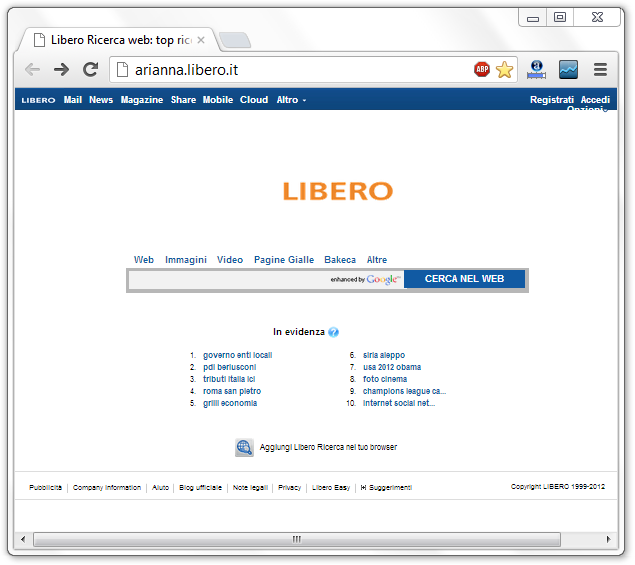
Libero can be voluntarily used and added as a provided search engine as well but the risk of visiting and using Libero services and websites is that your internet activity may be traced, tracked, and used against you, or used to configure strategies to generate revenue off your internet clicks and searches. Many internet users whom have been involuntarily affected by Libero often complain of third party malware may have infected their system along side, prior to, or bundled with Libero.it redirections.



How to remove the Libero redirection virus
To ensure removal of Libero and stop them from tracking your activity it is recommended to clear your browser cache and cookie load before and after repairing internet browser settings. You can clear your browser cache and cookie files in your internet browser’s preference, settings, or tools options.
Botcrawl may earn a commission from purchases made through links in this article.
 |
 |
 |
 |
 5/5 5/5 |
5/5 |
4/5 |
3/5 |
| Purchase Now | Purchase Now | Purchase Now | Purchase Now |
| Malwarebytes | Free Download | Free Download | Free Download |
1. Repair Home Page Settings
To stop Libero from overtaking your internet browser upon start up, repair your home page settings per each browser installed on your system.
Microsoft Internet Explorer Users:
1. Click Tools and select Internet Options.
2. In the “Home Page” query remove Libero.it, Arianna.Libero.it, or similar URLs and type your preferred home page (google.com, bing.com, botcrawl.com) or select default or blank.
Mozilla Firefox Users:
1. Click the Firefox Tools menu.
2. Select Options.
3. In the General tab where it says “Home page” in the Start Up section remove Libero.it, Arianna.Libero.it, or similar URLs and type your preferred webpage (google.com, bing.com, botcrawl.com).
Google Chrome Users:
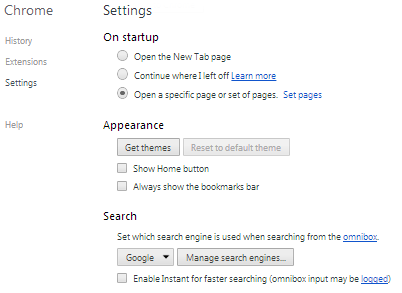
1. Click the 3 bar or wrench settings icon and select settings.
2. In the On start up section select Set pages.
3. Remove the Libero.it, Arianna.Libero.it, or similar URLs by selecting the X next to the URL upon clicking on and highlighting the website’s link.
2. Repair Provided Search Engine
To stop redirecting to Libero.it related website, repair your provided/managed search engines settings per each browser installed on your system.
Microsoft Internet Explorer Users:
1. Click Tools and select Manage add-ons.
2. Navigate to the Search Providers list.
3. Search for Libero.it, Arianna.Libero.it, or related search engines and click the Remove button (at least disable).
Mozilla Firefox Users:
1. Click the small search arrow or magnify glass near the search bar at the top of the internet browser.
2. Select Manage search engines…
3. Highlight the Libero.it, Arianna.Libero.it, or related search engines and click remove.
Google Chrome Users:
1. Click the 3 bar or wrench settings icon and select Settings.
2. In the Search section select the Manage search engines… button.
3. Remove the Libero.it, Arianna.Libero.it, or related search engines by selecting the X next to the URL upon clicking on and highlighting the website(s).