Beware of Center Parcs Longleat Forest Facebook Scams
The family-focused resort village in Warminster, UK named Center Parcs has been a popular target for online scammers over the years. There are many scams that use the resort villages name in order to scam people over the internet.

One scam claims that you can win a Win A Center Parcs Longleat Holiday For 4 if you visit a website and complete a survey. However, you have to visit a third-party website that contains never-ending surveys designed to phish information about you. Before you take surveys you are usually asked for your email address, full name, date of birth, home address, and phone number. Then the surveys start.
The surveys are typically random. For example, you might get asked “Coca-Cola and Coors are testing marijuana-infused drinks. Would you try them?” and “What kind of content do you seek out the most on the Internet?”
When you are done with the initial survey it will again ask you for your fill name, email address, phone number, date of birth, and more. Then, another survey will be displayed.
The purpose of the surveys are to phish the information you submit to them. Your personal information can be used for a variety of purposes. You can expect to receive junk mail at home, spam email messages, and questionable phone calls from telemarketers and potential scammers.
The survey site will also direct you to other suspicious third-party websites. If you are asked about a job interest you might be directed to a website that promotes the topic.
I would not trust any websites associated with the survey site as they too are basically developed to gather your personal information. Also, you won’t win anything by completing these surveys, unless junk mail at home is a prize to you, so avoid completing them and providing your information to them.
Now back to Center Parcs Longleat Forest. You won’t win a holiday for 4 to the resort if you complete online surveys or follow instructions published in a Facebook post. The Facebook post was likely published by one of many fake Center Parcs Longleat Forest Facebook pages. There is only one verified Center Parcs aFacebook page and you can find it here: https://www.facebook.com/CenterParcsUK/
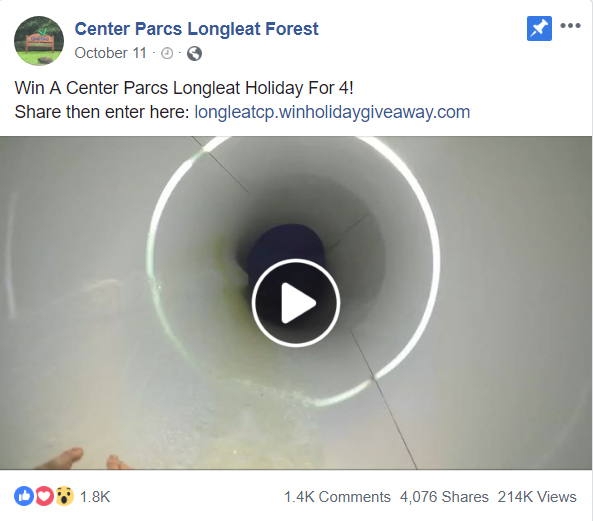
Here’s an example of what was published by one of the Center Parcs Faebook pages trying to scam you:
Win A Center Parcs Longleat Holiday For 4!
Share then enter here: longleatcp.winholidaygiveaway.com
As you can see, the post insists that you visit a survey website and complete surveys in order to win a holiday for 4 to Center Parcs.
What to do if you fell for a scam
- Do not share or like the post. This only promotes it to more people which is how these scams are usually spread in the first place. If you did, visit your activity and unlike the post.
- If you completed online surveys associated there is not much that you can do. However, if you supplied your personal banking or credit information to a survey it is strongly suggested to contact your bank or credit institution for assistance.
- If you sent an advanced payment in order to receive a prize contact your bank or credit card and file a claim against the transaction. Explain to your bank or the credit card company what happened in order to receive assistance for the matter.
- If you used an online payment service to make an advanced payment contact them and let them know what happened. It is possible that you will be able to receive your money back from them.
- Terminate all association with the Facebook page. Unlike the Facebook page, report the Facebook page, tell friends that you might have tagged about the scam, and even change your Facebook password for safe measure.